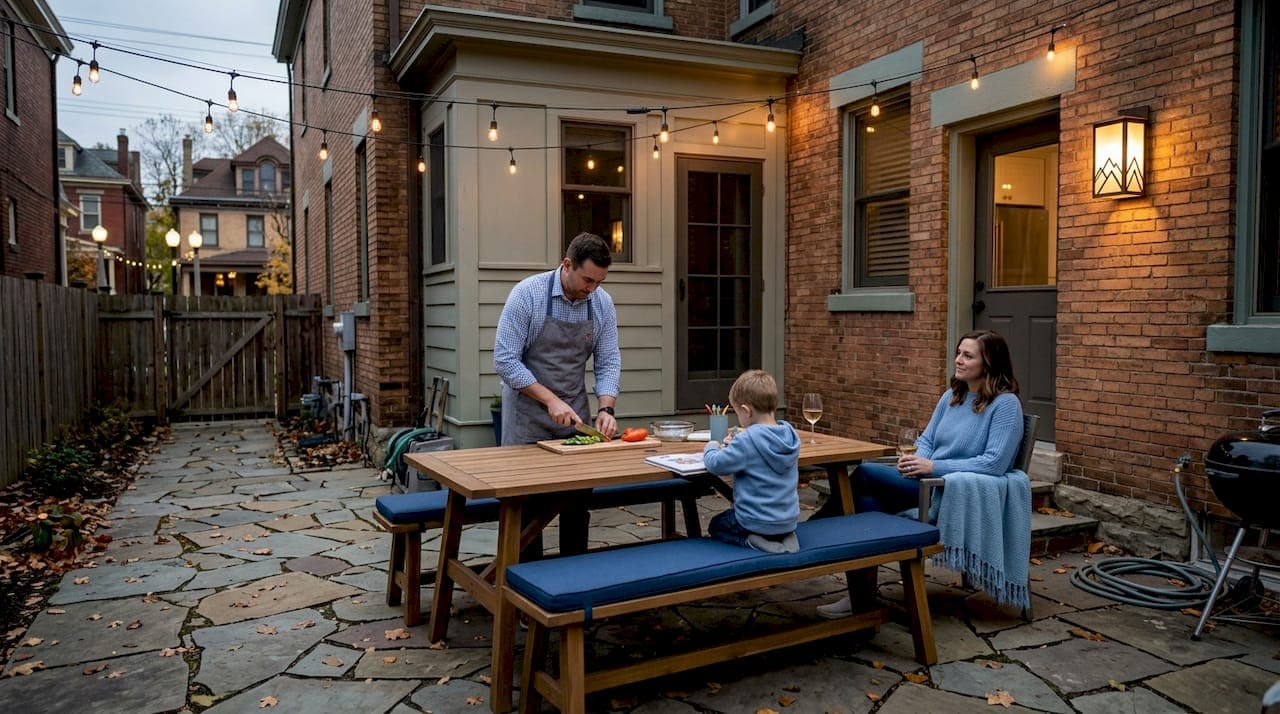
Your patio is an extension of your home, and how you light it determines whether it feels inviting, safe, and usable well into the evening or just sits dark and overlooked. Pittsburgh homeowners face a real challenge here: the city's winters are brutal, summers are humid, and the weather shifts fast. Choosing lighting that looks great in July but fails by February is a frustrating and expensive mistake. This guide walks you through everything you need to know, from selecting the right fixtures to comparing minimalist and dramatic styles, so you can make confident choices that last year-round.
Table of Contents
- How to select the perfect lighting for your patio
- Inspiring patio lighting ideas for every style
- Minimalist vs. dramatic: Contrasting patio lighting styles
- Making the right choice for Pittsburgh: Climate, energy and safety
- Our perspective: What most homeowners miss about patio lighting
- Ready to transform your patio? Lighting solutions from Pittsburgh experts
- Frequently asked questions
Key Takeaways
| Point | Details |
|---|---|
| Apply layered lighting | Mix ambient, task, and accent lighting for a safe, inviting patio in Pittsburgh. |
| Balance style and function | Choose lights that match your design vision and withstand Pittsburgh’s weather. |
| Contrast lighting styles | Minimalist and dramatic setups both work but serve different needs and aesthetics. |
| Plan for safety | Illuminate steps, pathways, and entry points for year-round usability. |
| Consult local experts | Local lighting pros can help you navigate installation, maintenance, and code requirements. |
How to select the perfect lighting for your patio
Patio lighting is rarely a single decision. It's a system. The most effective outdoor spaces use what designers call layered lighting, which means combining ambient, task, and accent layers to cover every function and mood.
Ambient lighting creates the overall glow. Think string lights draped overhead or a flush-mount fixture near the door. This layer sets the tone and makes the space feel warm and welcoming.
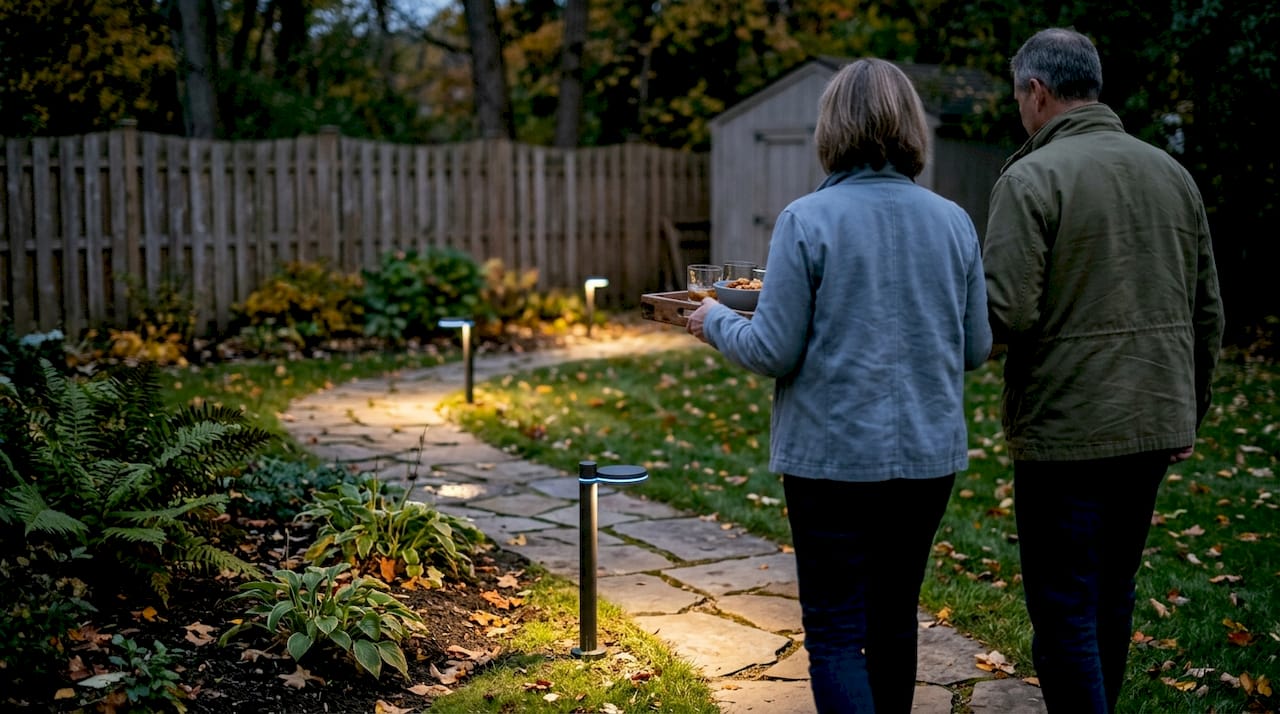
Task lighting is the practical layer. It covers paths, steps, and entryways with enough brightness to keep people safe. Task fixtures typically output between 100 and 300 lumens, which is enough to illuminate without blinding.
Accent lighting goes beyond function. Spotlights aimed at a garden bed, uplights washing a stone wall, or a fixture drawing attention to a water feature all fall into this category.
Getting all three right requires planning. Before you buy a single fixture, think about choosing outdoor lighting fixtures that match your patio's size, layout, and architecture. A sprawling backyard with multiple zones needs a different approach than a compact front patio.
Here's what to evaluate before you commit:
- Function first. What do you need each area to do? Dining, relaxing, navigating steps?
- Style alignment. Do you want fixtures that blend in or stand out as design elements?
- Climate durability. In Pittsburgh, fixtures need an IP (ingress protection) rating of at least IP65 to handle rain, snow, and ice.
- Energy efficiency. LED fixtures consume up to 75% less energy than incandescent options and last significantly longer.
- Power source. Wired, low-voltage, or solar all have different reliability profiles in Pittsburgh's climate.
Understanding path lighting basics is especially important for any Pittsburgh homeowner dealing with uneven terrain, sloped driveways, or stone steps that get slippery in winter.
Pro Tip: Use a combination of solar lights for decorative accent areas and wired or low-voltage fixtures for safety-critical zones like steps and paths. Solar can struggle on cloudy Pittsburgh days, so never rely on it alone where reliability matters most.
Inspiring patio lighting ideas for every style
Armed with your criteria, it's time to explore what's actually possible. The range of patio lighting options available today is wider than most homeowners realize.
Ambient ideas worth considering:
- String lights draped across pergolas or between posts create a soft, restaurant-like glow. Warm white (2700K to 3000K) works best for relaxing spaces.
- Overhead pendants add a polished, architectural feel and work well over dining areas or fire pit seating.
- Lanterns mounted on posts or fences bring a traditional Pittsburgh character that suits older craftsman and colonial-style homes.
Task ideas that prioritize safety:
- Path lights are among the most practical upgrades you can make. According to lighting specs for patios, path lights should output 100 to 200 lumens each and be spaced 5 to 8 feet apart for consistent coverage without harsh gaps.
- Step lighting embedded into risers or mounted on side walls keeps foot traffic safe after dark and adds a sleek visual effect.
- Motion-sensor lights near entries and garages serve double duty: safety and energy efficiency.
Accent ideas for drama and character:
- Uplights aimed at trees, shrubs, or columns create striking visual depth. Fixtures between 3W and 7W angled at 30 to 45 degrees hit the sweet spot between too dim and overwhelming.
- Wall sconces flanking a door or running along a fence line frame your outdoor space and highlight lighting for architectural features like stone pillars or brick facades.
- Downlights mounted in pergola beams or overhead structures mimic moonlight and create a natural, layered effect.
Here's a quick reference for fixture types and where they work best:
| Fixture type | Best-use area | Recommended output | Notes |
|---|---|---|---|
| String lights | Pergola, overhead | 200-400 lumens total | Warm white, 2700K-3000K |
| Path lights | Walkways, garden edges | 100-200 lumens each | Space 5-8 ft apart |
| Uplights | Trees, walls, columns | 3-7W, 30-45° angle | Use warm or cool white |
| Step lights | Stairs, deck edges | 50-100 lumens each | Recessed or side-mount |
| Wall sconces | Entryways, fences | 400-800 lumens | Match home's architecture |
| Pendants | Dining areas, porches | 600-1200 lumens | Weatherproof rated required |
For Pittsburgh yards with slopes and mature trees, pathway lighting ideas can help you think through placement before you start digging.
Pro Tip: Before committing to a full installation, use temporary clip-on lights and battery-powered fixtures to test your layout after dark. You'll spot blind spots and over-lit areas that are invisible in a daytime plan.
Minimalist vs. dramatic: Contrasting patio lighting styles
Now that you have options in front of you, the next question is what kind of look you actually want. Two broad philosophies dominate outdoor lighting design, and each one suits different homes, lifestyles, and budgets.
Minimalist lighting takes a "less is more" approach. It relies on fewer, carefully placed fixtures to create clean lines and subtle ambiance. A single overhead pendant over a small seating area, paired with low-profile path lights, is a perfect example. Solar-powered fixtures fit naturally into this style because they're unobtrusive and require no visible wiring.
Layered or dramatic lighting goes the opposite direction. Multiple zones, varied fixture heights, feature-highlighted trees, and illuminated architectural details create a rich, hotel-lobby-quality atmosphere that's ideal for entertaining. This style typically uses wired systems for maximum reliability.
As architectural design sources note, the contrast between these two schools comes down to a core trade-off: minimalist setups are easier to install and cost less upfront, while wired, layered systems deliver the consistent performance Pittsburgh winters demand.
Here's how the two approaches stack up:
| Factor | Minimalist | Layered/dramatic |
|---|---|---|
| Upfront cost | Lower ($150-$500) | Higher ($800-$3,000+) |
| Installation complexity | Easy to DIY | Usually requires professional |
| Maintenance | Low, mostly bulb swaps | Moderate, more components |
| Ambience | Subtle, understated | Rich, multi-dimensional |
| Winter reliability | Lower (solar limitations) | Higher (wired systems) |
| Energy cost | Very low | Low to moderate (LED) |
Some things to consider for each style:
Minimalist suits you if:
- Your patio is small or lightly used.
- You prefer a contemporary, uncluttered look.
- You're renting and need a reversible setup.
Layered/dramatic suits you if:
- You entertain frequently or use your patio into the fall and winter.
- Your home has architectural features worth highlighting.
- You want to maximize curb appeal and property value.
"The best patio lighting plan isn't the most elaborate one. It's the one that matches how you actually use your outdoor space and holds up through Pittsburgh's four-season climate without constant fixes."
Looking into energy-efficient lighting options can help you keep operating costs in check regardless of which style you choose.
Making the right choice for Pittsburgh: Climate, energy and safety
After comparing lighting philosophies, it's time to ground your decision in Pittsburgh-specific realities. This city gets an average of 39 inches of snow per year, more than 200 cloudy days, and temperature swings that test even commercial-grade fixtures.
Solar lighting's limitations in Pittsburgh. Solar panels need direct sunlight to charge effectively. In Pittsburgh's overcast winters, that's unreliable. For safety-critical areas like steps and entryways, solar is not a dependable primary solution. Use it for decorative accents where occasional darkness is acceptable.
Low-voltage and wired systems deliver consistency. A 12-volt low-voltage system is the sweet spot for most Pittsburgh homeowners. It's safe to DIY (no licensed electrician required for the low-voltage portion), energy efficient, and compatible with smart timers and dimmers. Full-voltage wired systems are reserved for high-output fixtures or complex installations.
LED is the only real choice. LED fixtures produce task lighting for paths with 100 to 300 lumens at a fraction of the energy halogen or incandescent options require. They last 25,000 to 50,000 hours, which means years of operation before you need a replacement.
Use this checklist to plan a reliable all-season patio lighting system:
- Map your zones. Identify ambient, task, and accent areas on a simple sketch of your patio.
- Prioritize safety first. Steps, uneven surfaces, and main walkways get task lighting before anything decorative goes in.
- Choose IP-rated fixtures. Look for IP65 or higher for any fixture exposed to rain or snow.
- Decide on your power source. Low-voltage wired systems work best for Pittsburgh winters; solar for accent-only areas.
- Add smart controls. Timers, motion sensors, and app-based dimmers increase convenience and reduce energy waste.
- Check local codes. Pittsburgh and Allegheny County have specific requirements for outdoor electrical work. Permits may be required for new circuits.
Here's when to call a professional rather than DIY:
- You need a new outdoor circuit from your panel.
- You're installing in-ground fixtures near irrigation systems.
- You want concealed wiring for a clean, finished look.
- You're unsure about code compliance for your area.
Following a proven process for installing pathway lights in Pittsburgh saves time and prevents the costly mistakes that come from guessing at spacing and power requirements.
Our perspective: What most homeowners miss about patio lighting
Here's something we see regularly: homeowners spend hours browsing Pinterest and Instagram for patio lighting inspiration, then buy a bunch of solar string lights from a big-box store, hang them up, and feel disappointed by February. The aesthetic works for about three months. Then the batteries underperform, the warmth fades, and the whole setup starts to look tired.
The problem isn't the design taste. It's that national trends are built for California patios and Texas backyards, not Pittsburgh winters. What looks effortlessly beautiful in a San Diego courtyard may be completely wrong for a home in Shadyside or Mt. Lebanon.
Our experience working with Pittsburgh homeowners has taught us three things that most lighting guides won't tell you.
First, the biggest source of regret isn't overspending, it's under-planning. Homeowners who skip the layered approach almost always come back wanting more. They light the dining area well but forget the path to the garage. They accent the tree but leave the steps dark. These gaps are fixable, but they're also avoidable with upfront planning.
Second, flexibility matters more than perfection. Installing an extra outdoor outlet now costs almost nothing compared to adding one later. Smart lighting controls that let you adjust brightness and timing by season make your patio genuinely useful in October, not just July. Plan for how you'll use the space in fall and winter, not just on warm summer nights.
Third, maintenance is part of the investment. A lighting plan that looks great but requires constant bulb swaps or fixture replacements in Pittsburgh's freeze-thaw cycles will feel like a burden within two years. Spend a little more on quality, weatherproof fixtures upfront and you'll spend far less in frustration later.
For a deeper look at how thoughtful planning translates to real results, these outdoor lighting design insights are worth a read before you finalize any plan.
Pro Tip: Plan for at least one additional outdoor outlet beyond what you think you need. Extra capacity means you can expand your lighting later without rewiring, and it gives you flexibility for seasonal displays, outdoor speakers, or a future fire pit setup.
Ready to transform your patio? Lighting solutions from Pittsburgh experts
If any part of this guide sparked ideas for your outdoor space, you don't have to figure it all out on your own.

At Myriad Lighting, we design and install custom outdoor lighting systems built specifically for Pittsburgh homes. We know what holds up through Allegheny County winters, what looks stunning on craftsman bungalows and modern new builds alike, and how to wire everything cleanly so it actually works the way it should. Our patio landscape lighting services cover everything from initial consultation to final adjustments, with no exposed wiring and no guesswork. Whether you're thinking about a full layered design or something simpler and seasonal, including holiday lighting experts for the festive months, we can build a plan that fits your budget, your style, and your home.
Reach out to schedule a design consultation and see what's possible for your patio this season.
Frequently asked questions
What type of patio lighting works best in Pittsburgh's winter?
Wired low-voltage or LED fixtures are the most reliable choice for Pittsburgh winters, since solar struggles in the city's limited winter sunlight and heavy snowfall. Reserve solar fixtures for accent-only roles where occasional darkness isn't a safety concern.
How bright should patio path lights be?
Path lights should deliver 100 to 200 lumens per fixture and be spaced 5 to 8 feet apart to create safe, consistent illumination along walkways without harsh bright spots or dark gaps between them.
What's the difference between task, ambient, and accent lighting for patios?
Ambient lighting provides the overall glow for your space, task lighting covers safety along paths and steps using 100 to 300 lumens, and accent lighting highlights specific features like plants, columns, or water elements for visual interest.
Are energy-efficient patio lights worth it?
Yes, absolutely. LED patio lights use significantly less energy than older bulb types, last tens of thousands of hours, and perform reliably across Pittsburgh's full temperature range, making them a smart long-term investment for both your wallet and your outdoor comfort.