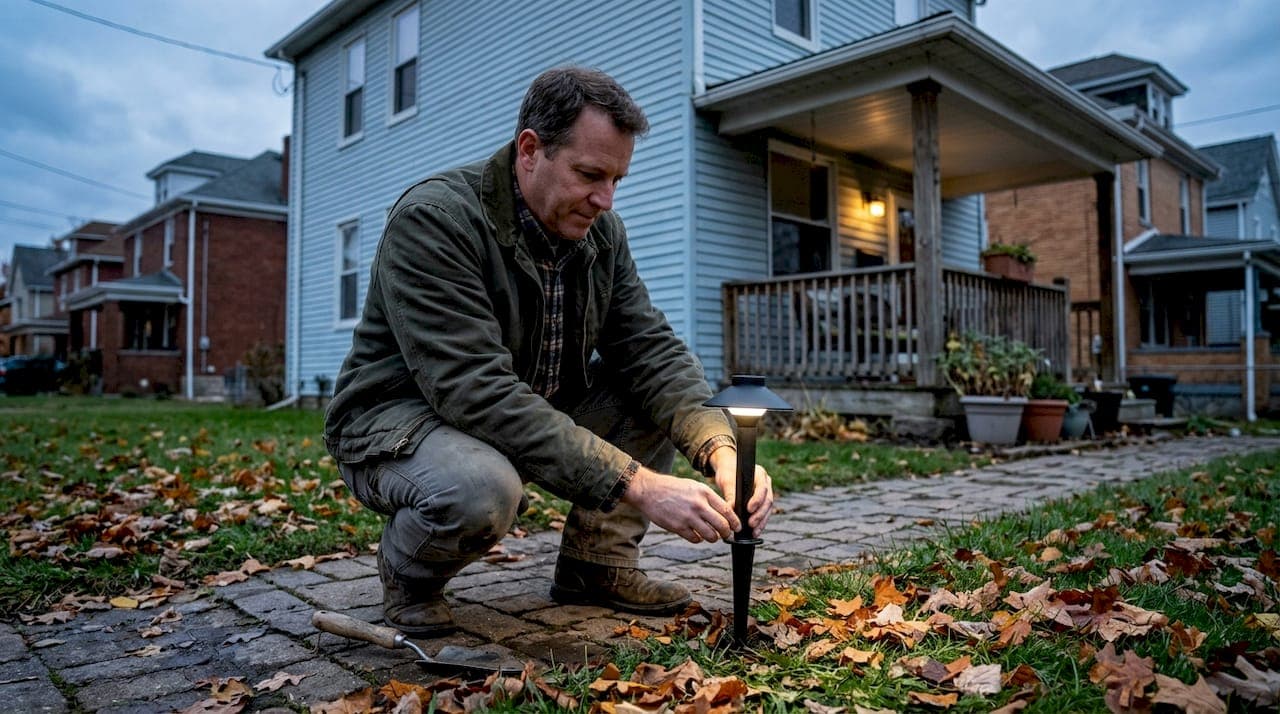
Most Pittsburgh homeowners are quietly overpaying every single month. Outdated incandescent and halogen fixtures burn through electricity at a shocking rate, and the waste adds up fast. The good news is that LED outdoor lighting uses up to 90% less energy than traditional bulbs and lasts 25 times longer, meaning one simple upgrade can cut costs and make your home look better at the same time. This guide walks you through the technologies, real savings numbers, and practical steps to make the switch with confidence.
Table of Contents
- What makes outdoor lighting energy-efficient?
- LED vs. traditional bulbs: Cost, performance, and ROI comparison
- Real benefits for Pittsburgh homeowners
- Steps to upgrade: How to switch to energy-efficient outdoor lighting
- Why most homeowners underestimate the true value of energy-efficient outdoor lighting
- Ready to transform your property with energy-efficient outdoor lighting?
- Frequently asked questions
Key Takeaways
| Point | Details |
|---|---|
| LEDs offer maximum savings | LED fixtures cut outdoor energy use and bills by up to 90% compared to older bulbs. |
| Pittsburgh solutions require weatherproofing | Properly rated fixtures and professional installation are essential to withstand local snow and rain. |
| Upfront costs pay for themselves | Higher initial investment in LEDs quickly returns value through lower bills and minimal maintenance. |
| Rebates lower your investment | State and utility incentives reduce the net cost of upgrading to high-efficiency lighting. |
What makes outdoor lighting energy-efficient?
Energy-efficient outdoor lighting is not just about using a different bulb. It is about delivering more light with fewer watts. The core metric is lumens per watt (lm/W), which measures how much visible light a fixture produces per unit of energy. Higher lm/W means better efficiency and lower bills.
Three technologies dominate today's market:
- LED (Light Emitting Diode): The gold standard. LEDs produce 40 to 150 lm/W compared to just 13 lm/W for old incandescent bulbs. They are built to last, run cool, and come in dozens of color temperatures.
- Low-voltage (12V) systems: These systems run on a transformer that steps household current down to 12 volts, making them safer to install and far cheaper to operate than standard line-voltage setups.
- Solar-powered fixtures: Solar lights collect energy during the day and release it at night with zero ongoing electricity cost. They work best in spots with consistent sun exposure.
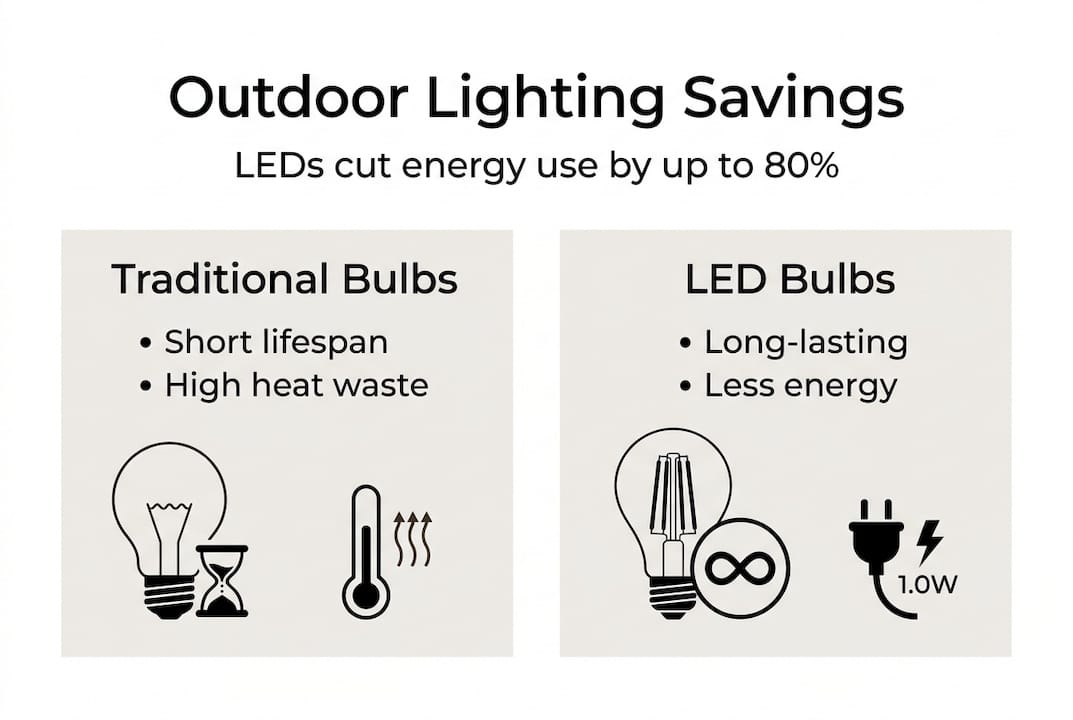
Why do older bulbs waste so much? Traditional incandescent bulbs convert about 80% of their energy into heat, not light. You are essentially paying to warm the outside air. LED technology reverses that equation entirely.
Efficiency snapshot: LED systems consume 75 to 90% less energy than traditional incandescent or halogen bulbs while lasting 25,000 to 50,000+ hours.
The lifespan difference is where the real money hides. An incandescent bulb lasts roughly 1,000 to 2,000 hours. A quality LED fixture can run for 25,000 to 50,000 hours. That is decades of reliable illumination without a ladder or a trip to the hardware store. For a homeowner interested in nightscape lighting benefits, this kind of durability makes professionally designed systems a genuinely smart long-term investment.
In short, energy-efficient outdoor lighting means spending less electricity, replacing bulbs far less often, and producing light that actually works for your yard's design goals.
LED vs. traditional bulbs: Cost, performance, and ROI comparison
Let's get to the numbers that actually matter for your household budget.
| Factor | Incandescent / Halogen | LED |
|---|---|---|
| Upfront cost per bulb | Low ($1 to $5) | Moderate ($5 to $20) |
| Lifespan | 1,000 to 2,000 hours | 25,000 to 50,000+ hours |
| Energy use (60W equivalent) | 60 watts | 8 to 10 watts |
| Annual energy cost (6 hrs/day) | ~$13 to $16 | ~$2 to $3 |
| Maintenance frequency | Every 1 to 2 years | Every 10 to 15+ years |
| Heat output | High | Very low |
The table makes it clear: LEDs yield superior long-term ROI over halogen and incandescent options, with 90% less energy use and a lifespan 25 times greater. Yes, the upfront price is higher. But the payback period for most Pittsburgh homeowners is typically 2 to 3 years, after which the savings are pure profit.
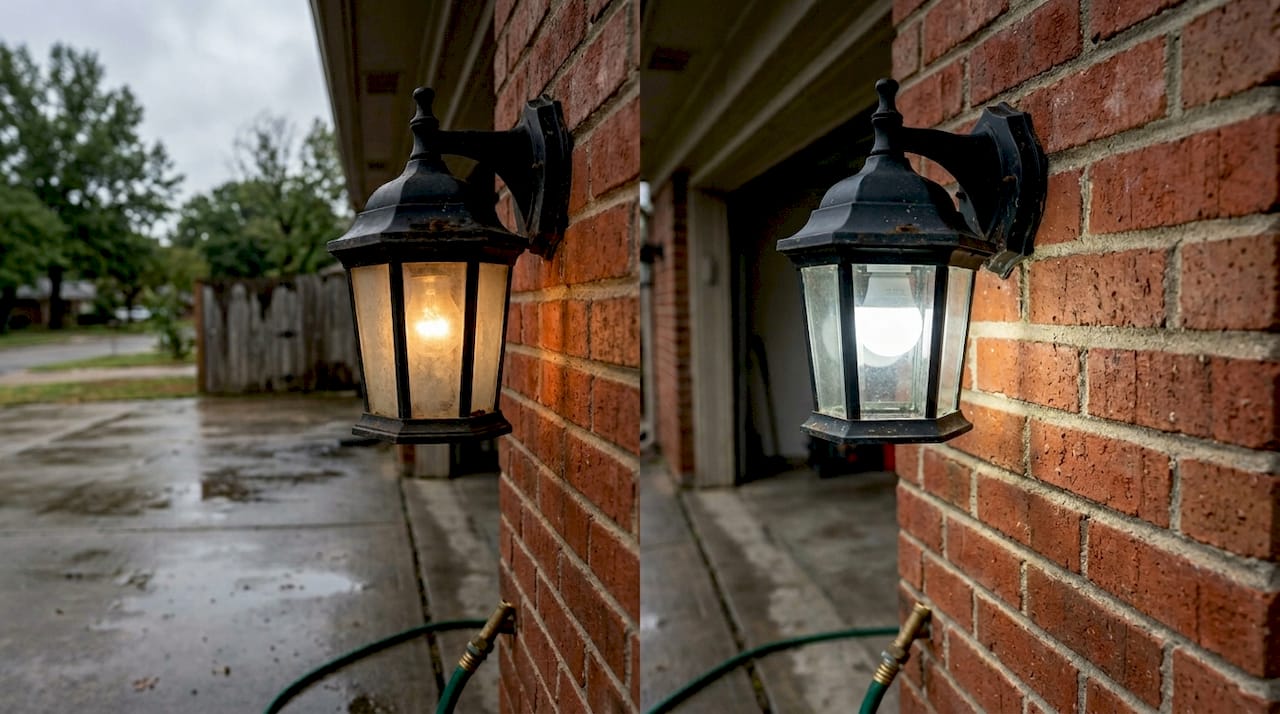
One concern we hear often is about appearance. People worry that LEDs look cold or clinical. That was true of early LED technology. Modern LEDs come in warm white (2700K to 3000K), which closely mimics the cozy glow of traditional bulbs. You can actually explore how LED lighting benefits extend beyond just efficiency to include color rendering and layered design effects.
For security and pathway lighting, you may want to review a motion-activated lighting comparison to find fixtures that combine LED efficiency with smart sensor technology.
Pro Tip: Pennsylvania's Act 129 program and utility providers like Duquesne Light offer rebates for qualifying LED upgrades. These rebates can shave 10 to 30% off your purchase cost, making the payback period even shorter. Always check current offers before buying.
Real benefits for Pittsburgh homeowners
Pittsburgh is not a mild climate. Winters hit hard, summers bring humidity, and the shoulder seasons mean constant freeze-thaw cycles. Your outdoor lighting has to survive all of it.
That makes fixture quality and installation method critical, not optional. Look for fixtures rated IP65 or higher, which means they are fully dust-sealed and protected against water jets from any direction. A cheaper fixture rated IP44 might work for a mild climate, but it will fail quickly here.
The energy savings are real and quantifiable. Pennsylvania households use over 10,000 kWh per year on average, with annual energy bills exceeding $2,000 for many families. Switching outdoor lighting to LEDs can cut that portion of your bill by up to 80%. That is not a rounding error; that is real money back in your pocket every month.
Here is a quick summary of what Pittsburgh homeowners gain:
- Lower utility bills: Up to 80% reduction in outdoor lighting energy costs
- Better curb appeal: Modern fixtures and smart placement create a dramatically more attractive home exterior
- Less maintenance: No more annual bulb replacements, especially important in winter
- Improved safety: Well-lit driveways, walkways, and entryways reduce slip-and-fall risk
- Higher property value: Quality outdoor lighting enhances Pittsburgh homes in ways that appraisers and buyers notice
- Eco-friendly: Fewer bulbs in landfills, less carbon output from your home
The Act 129 program has saved 8.8 million MWh statewide since 2009, representing $6.4 billion in avoided energy costs. Duquesne Light and Penn Power both offer rebate programs for residential LED upgrades. Taking advantage of these programs turns a smart decision into an even smarter one financially.
Gradual upgrades work, too. You do not need to replace every fixture on your property overnight. Start with the highest-wattage fixtures, like floodlights and dusk-to-dawn security lights, and work your way through the rest. Each swap delivers immediate savings.
Steps to upgrade: How to switch to energy-efficient outdoor lighting
Making the switch is easier than most homeowners expect. Here is a straightforward process that works whether you go DIY or hire a professional.
- Assess your current setup. Walk your property at night. Note which fixtures are brightest (highest wattage), which areas feel dark or underlit, and which fixtures are hard to reach. Write it all down.
- Check your fixture types and wattage. Knowing whether you have line-voltage or low-voltage systems matters. Low-voltage lighting systems are easier to modify and safer to work with, but line-voltage fixtures can be swapped out with matching LED replacements.
- Choose Energy Star-rated replacements. The Energy Star label guarantees independent testing for efficiency and performance. Look for IP65+ ratings for all outdoor fixtures.
- Avoid common mistakes. Improper fixture placement, mismatched color temperatures, and underestimating Pittsburgh's weather are the top errors. Reviewing common outdoor lighting mistakes before you buy will save you frustration.
- Apply for rebates before purchasing. Check Duquesne Light or Penn Power websites for current incentive programs. Some rebates require pre-approval.
- Install and test. Complete the installation, then walk the property at night again. Adjust angles and positions before finalizing.
Pro Tip: Adding smart controls like timers, dimmers, or motion sensors during your upgrade can increase energy savings by an additional 20 to 30%. It is also worth thinking about how fixtures contribute to the bigger picture of illuminating curb appeal rather than just swapping bulbs.
"The outdoor lighting market is projected to reach $22 billion by 2030, driven largely by LED adoption. Weather-resistant installation is a key performance factor in climates like Pittsburgh's."
Why most homeowners underestimate the true value of energy-efficient outdoor lighting
Here is something we see constantly: a homeowner compares the sticker price of an LED fixture to a cheap halogen and decides it is not worth it. They focus on the $15 price gap and ignore the $150 difference in energy costs over three years. That narrow framing costs people real money.
But the bigger missed opportunity is design. Energy-efficient lighting is not just an electrical upgrade. It is a chance to completely transform how your home looks and feels after dark. Modern LED systems let you layer light, highlight architectural features, and create depth and warmth that older technology simply could not deliver. The quality outdoor lighting impact on a home's character and perceived value is often far larger than the energy savings alone.
There is also the comfort factor. Coming home to a beautifully lit property every evening is genuinely pleasant. It raises your sense of pride and security in ways that are hard to put a number on but are very real.
And remember: traditional bulbs waste about 80% of their energy as heat. Every dollar you spend on an old halogen fixture, roughly 80 cents is going straight into the air. That is not just inefficient. It is avoidable.
Ready to transform your property with energy-efficient outdoor lighting?
We work with Pittsburgh homeowners every day who are surprised by how much a professional lighting system changes their property. From weatherproof hardscape and landscape lighting that survives our winters to show-stopping holiday lighting expertise that turns heads on your street, Myriad Lighting handles the full process from design to installation.

If you are planning something special, we also offer tailored wedding lighting enhancements that bring elegance to any outdoor space. Every project starts with a consultation where we assess your property, understand your goals, and put together a plan that fits your budget and style. Reach out today and let's build something your neighbors will notice.
Frequently asked questions
How much can I save by switching to energy-efficient outdoor lighting?
Pittsburgh homeowners can cut outdoor lighting energy use by up to 80% with LEDs, often saving $100 or more per year depending on the number of fixtures replaced.
Are LEDs really better for Pittsburgh's weather?
Yes. Weather-resistant LED fixtures rated IP65 or higher handle Pittsburgh's snow, rain, and temperature swings with minimal maintenance and long-term reliability.
What are the main rebates or incentives for upgrading my lights?
Pennsylvania's Act 129 energy efficiency programs and utility rebates from Duquesne Light and Penn Power can help offset the upfront cost of qualifying LED upgrades.
How do I choose the best energy-efficient outdoor light for security?
Choose bright, IP65-rated LED fixtures or motion-activated LEDs that combine low operating costs with reliable all-weather performance for effective home security lighting.
Recommended
- Motion-activated outdoor lighting: homeowner's guide
- Avoid These Outdoor Lighting Mistakes for a Safer Home
- How to illuminate building exteriors for stunning curb appeal
- How quality outdoor lighting enhances Pittsburgh homes
- Outdoor Lighting Design Guide: Enhance Your Home's Ambiance
- Low voltage outdoor lighting: benefits, safety & Calgary tips