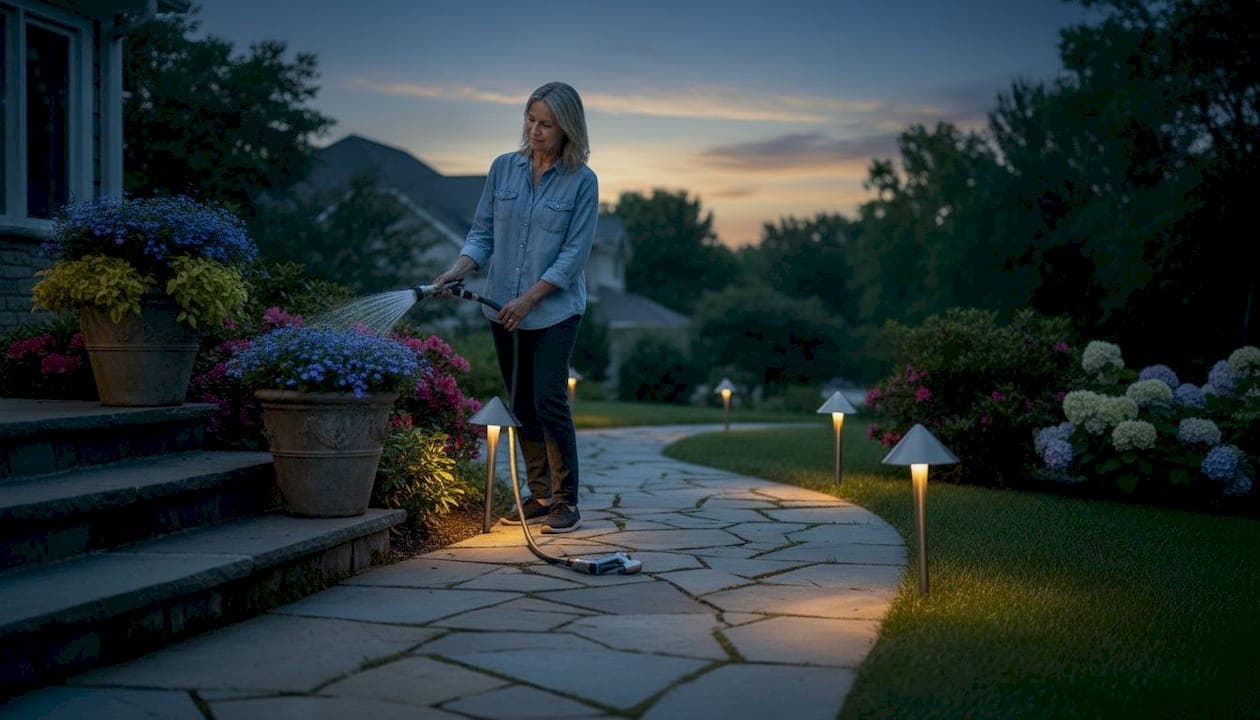
Most homeowners treat outdoor lighting as an afterthought, a decorative touch added once everything else is done. But path lighting is one of the most functional upgrades you can make to your property, and it happens to look stunning at the same time. It guides guests safely to your front door, defines the edges of your yard, and adds depth and warmth that transforms how your home looks after dark. Whether you have a sprawling backyard in Mt. Lebanon or a compact walkway in Shadyside, the right path lighting strategy changes everything.
Table of Contents
- What is path lighting and why does it matter?
- Types of path lighting fixtures explained
- Design considerations: Placement, spacing, and glare control
- Path lighting installation and safety essentials
- Why Pittsburgh homeowners shouldn't settle for 'one-size-fits-all' path lighting
- Ready to transform your outdoor space with expert path lighting?
- Frequently asked questions
Key Takeaways
| Point | Details |
|---|---|
| More than decoration | Path lighting dramatically boosts safety and showcases your landscape’s best features. |
| Fixture types matter | Choosing the right path lights can change your yard's look and effectiveness. |
| Smart spacing, less glare | Proper design and placement mean a safer, more beautiful walkway without harsh light. |
| Durability counts | IP65+ rated fixtures stand up to Pittsburgh weather for years of reliability. |
What is path lighting and why does it matter?
Before choosing fixtures or planning a layout, it helps to understand exactly what path lighting is and what it's designed to do.
Path lighting refers to outdoor lighting fixtures designed to illuminate walkways, driveways, garden paths, and similar surfaces to enhance safety, guide navigation, and add aesthetic appeal to landscapes. In other words, it's not just about making your yard look pretty at night. It's about making sure no one trips on an uneven flagstone, your mail carrier can see your front steps in November, and your property looks polished and intentional from the street.
"Path lighting is one of the most underutilized tools in residential landscaping. When done well, it doesn't just light a path, it tells a story about the home itself."
For Pittsburgh homeowners, this matters even more. Winters here are no joke. Between freeze-thaw cycles, heavy snow, and persistent fog rolling off the rivers, your yard is darker and more hazardous for a larger portion of the year than in warmer climates. Investing in quality landscape lighting in Pittsburgh means your home stays safe and welcoming through every season.
Here's a quick look at the core benefits path lighting delivers:
- Safety: Illuminates trip hazards, uneven pavers, and steps
- Navigation: Clearly guides guests from the street to your door
- Security: Reduces dark corners that attract unwanted attention
- Curb appeal: Adds dramatic visual interest to your property after sunset
- Plant and feature highlighting: Draws attention to garden beds, trees, and architectural details
- Property value: Well-designed outdoor lighting benefits your home's resale appeal
Each of these benefits compounds. A well-lit path doesn't just prevent one accident, it improves how your entire property is perceived and experienced every single night.
Types of path lighting fixtures explained
With a solid understanding of what path lighting does, the natural next question is: which fixture type is right for your space? The answer depends on your walkway width, landscape style, and the visual effect you want to create.
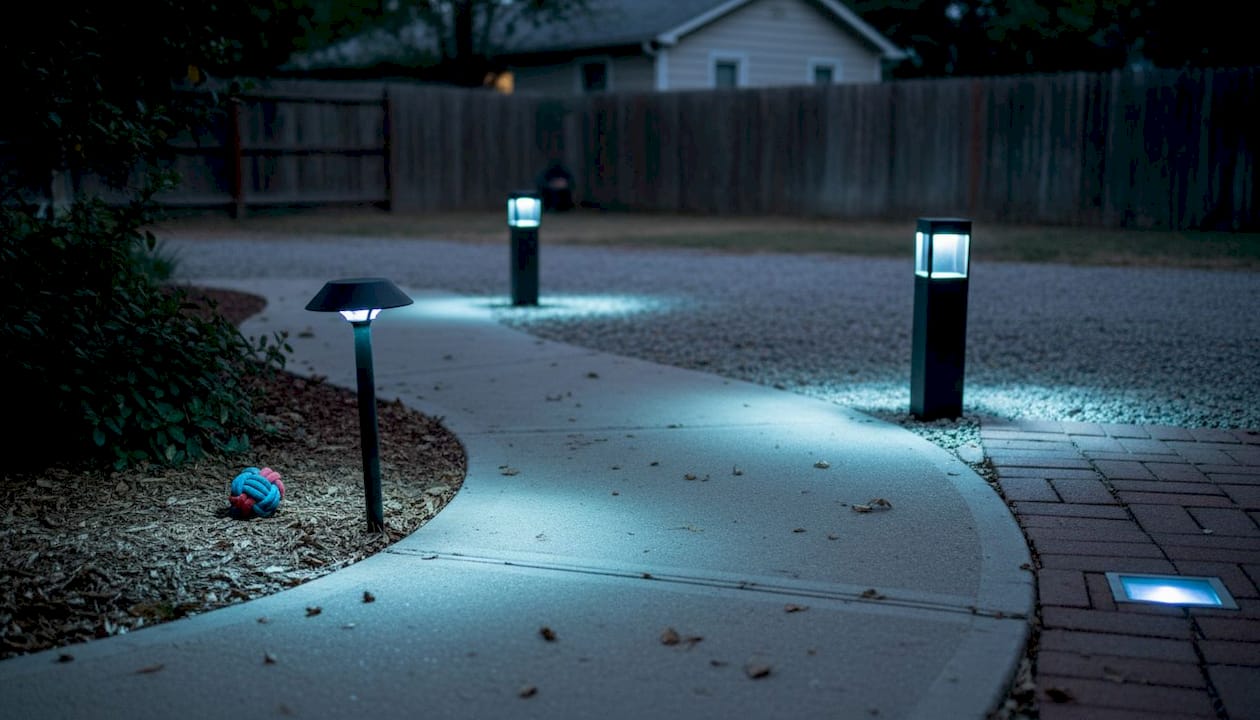
Common fixture types include path lights, which are short posts that cast downward light, bollards that spread light 360 degrees like a pillar, recessed and flush in-ground lights, uplights, downlights, and mushroom-style fixtures. Each has a distinct purpose and visual personality.
Here's a quick comparison to make the choice easier:
| Fixture type | Typical height | Light coverage | Best use |
|---|---|---|---|
| Path light (post) | 12 to 18 inches | Downward, focused | Walkways, garden edges |
| Bollard | 18 to 24 inches | 360-degree spread | Driveways, wide paths |
| Recessed/in-ground | Flush with ground | Upward or directional | Driveways, patios, steps |
| Uplight | Ground level | Upward wash | Trees, shrubs, walls |
| Downlight | Overhead or elevated | Downward wide wash | Large paths, patios |
| Mushroom style | 4 to 12 inches | Soft downward glow | Flower beds, narrow paths |
Path lights are the most common choice for residential walkways. They sit low enough to stay out of sightlines while casting enough light to make footing visible. They work beautifully in both traditional and modern landscape designs.
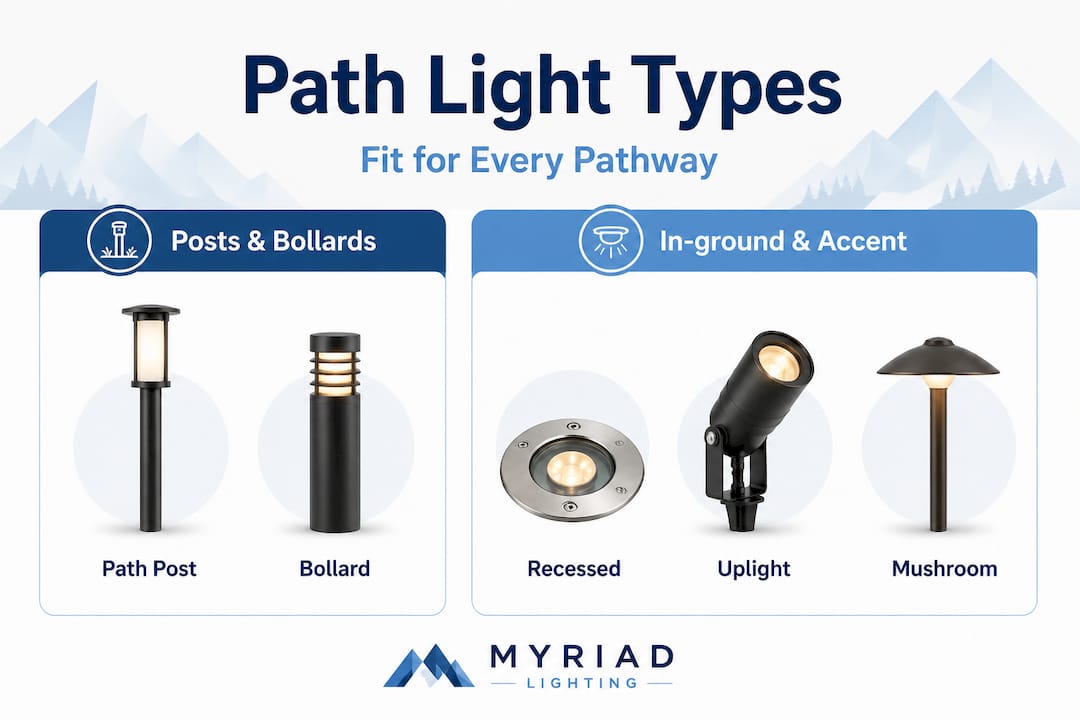
Bollards are taller and more architectural. They're ideal for wider driveways or formal entrance paths where you want a structured, deliberate look. Because they cast light in all directions, a single bollard covers more area than a path light of the same wattage.
Recessed in-ground lights are the sleekest option. They sit flush with the surface, making them nearly invisible during the day. They're particularly popular along driveways and patio edges where you want lighting without visible hardware.
Uplights work more as accent fixtures, casting light upward into trees or along fences and walls. They're often used alongside path lights to create layered depth rather than a flat line of illumination.
Mushroom-style fixtures are short, low-profile, and soft. They're perfect for flower beds and narrow garden paths where a taller post would look out of scale.
Pro Tip: Don't rely on a single fixture type for your entire yard. Mixing path posts along your main walkway with recessed lights at your driveway edge and mushroom fixtures in your garden beds creates a layered, dynamic effect that looks professionally designed. See how professional lighting features can elevate your property's overall feel.
Design considerations: Placement, spacing, and glare control
Once you know your fixture types, effective layout is the next step for a polished look and reliable safety. Even the best fixtures will underperform if they're placed incorrectly.
Layout matters for two distinct reasons: safety and ambiance. Poorly spaced lights leave dark gaps where footing becomes unpredictable. Lights that are too close together create harsh, overly bright corridors that feel industrial rather than inviting. The goal is balance, consistent illumination that feels natural rather than forced.
Staggered vs parallel placement is one of the most important design decisions you'll make. Staggering lights on alternating sides of a path creates an organic, garden-like feel. It mimics how light would fall naturally through trees or along a countryside trail. Parallel placement, where lights line up directly across from each other, creates a more formal, symmetrical look that suits traditional architectural styles and structured garden designs.
Expert guidance recommends staggering lights for a natural look versus parallel for a formal appearance, shielding fixtures to cut glare, and using IP65-rated or higher fixtures for long-term durability in outdoor environments.
Follow these steps to assess your own layout before purchasing anything:
- Walk the path at night without any lighting to identify the darkest and most hazardous points.
- Mark your fixture locations with stakes or tape, spacing them every 5 to 8 feet to start.
- Check for pools of darkness between your marked points and adjust spacing accordingly.
- Evaluate the view from the street to ensure lights contribute to curb appeal and don't create a cluttered look.
- Consider the surrounding landscape and how fixtures will interact with plants, walls, and other structures through different seasons.
Glare control is often overlooked but it's critical. A fixture that sends light directly into a guest's eyes is uncomfortable and defeats the purpose of a welcoming entrance. Look for fixtures with shielded or hooded designs that direct light downward onto the path rather than outward. This keeps illumination where it belongs and avoids the blinding effect of poorly aimed lights.
Pro Tip: Always look for an IP65 rating or higher when selecting path fixtures. IP65 means the fixture is dust tight and can withstand direct water jets, which is essential for Pittsburgh's rainy springs, snowy winters, and everything in between. Avoiding common outdoor lighting mistakes like choosing unrated fixtures is one of the fastest ways to protect your investment.
Path lighting installation and safety essentials
Design mapped out? Now let's turn to putting path lighting safely and effectively into action.
Installation generally falls into two categories: surface-mount and in-ground. Surface-mount fixtures, like post-style path lights, are easier to install and reposition. In-ground recessed fixtures require more planning and excavation but deliver a cleaner, more permanent result.
Most residential path lighting systems run on low-voltage wiring, typically 12 volts. Low-voltage systems are safer, more energy efficient, and easier to modify than standard line-voltage systems. They use a transformer that connects to a standard outdoor outlet, then distribute power along a cable buried just beneath the surface or hidden in mulch along the path edge.
Well-executed path lighting serves multiple functions at once: protecting people from trip hazards, highlighting yard features, and increasing curb appeal in ways that make a real difference in how a home is perceived and valued.
Here's a safety checklist every homeowner should review before installation:
- Always turn off power before connecting any wiring
- Use waterproof wire connectors rated for outdoor and underground use
- Bury cables at the depth recommended by local building codes
- Keep cable runs away from areas where digging might occur in the future
- Test all fixtures before covering wiring or mulching over connections
- Install a transformer with a timer or photocell so lights activate automatically at dusk
When to DIY vs hire a professional comes down to complexity and confidence. Simple low-voltage systems with surface-mounted fixtures are manageable for a motivated homeowner with basic tools. However, if your design involves in-ground fixtures, multiple transformer zones, integration with motion-activated lighting, or connection to a smart home system, professional installation becomes the smarter choice.
Common installation mistakes cost more to fix than they save upfront. Here's what to watch for:
| Mistake | Risk | Solution |
|---|---|---|
| Overlighting with too many fixtures | Harsh, uninviting appearance | Follow 5 to 8-foot spacing guidelines |
| Underlighting key areas | Trip hazards, reduced security | Audit the path at night before finalizing placement |
| Using non-rated fixtures | Early failure, water damage | Always choose weatherproof lighting options with IP65+ rating |
| Poor wire management | Exposed wires, safety hazards | Bury cables properly and use outdoor-rated conduit |
| Skipping transformer sizing | Flickering, dim lights | Calculate total fixture wattage before purchasing a transformer |
Investing in weatherproof, high-quality fixtures from the start is far less expensive than replacing cheap fixtures after a single Pittsburgh winter. Durability is not optional here.
Why Pittsburgh homeowners shouldn't settle for 'one-size-fits-all' path lighting
Here's something you won't read on most lighting blogs: the biggest mistake Pittsburgh homeowners make isn't choosing the wrong fixture. It's treating path lighting like a generic product problem rather than a design challenge specific to their property, their neighborhood, and their climate.
National brands and big-box retailers sell path lighting kits optimized for mild, dry climates. Those plastic and zinc fixtures that look fine in a showroom often crack, corrode, or fade after their first exposure to Pittsburgh's freeze-thaw cycles. When ground temperatures drop and rise repeatedly through a single winter, lesser materials fail at the joints, connections loosen, and water infiltrates housing that was never truly sealed.
Pittsburgh's architectural character also matters. A craftsman bungalow in Squirrel Hill has different visual needs than a modern colonial in Upper St. Clair. Mushroom fixtures and warm-toned bulbs read as natural and charming alongside mature trees and brick walkways. Clean-lined bollards and cooler color temperatures suit contemporary builds with straight-edged hardscaping. When you use a generic kit, you get a generic result that doesn't complement the home, it just exists alongside it.
From our experience designing lighting for Pittsburgh properties, tailored path lighting consistently delivers a measurable return. Beyond resale value, there's the daily quality-of-life benefit of arriving home to a property that looks intentional and beautiful rather than dark and neglected. Guests notice it. Neighbors notice it. And you notice it every single time you pull into your driveway.
The smarter approach is to think about material, fixture style, color temperature, and spacing as a unified system designed specifically for your property. Brass and copper fixtures hold up beautifully through harsh winters and develop a patina that looks better with age. Warm white LEDs in the 2700K to 3000K range feel welcoming and complement the warm masonry tones common in Pittsburgh neighborhoods. Thoughtful curb appeal strategies start with this kind of intentional planning, not with grabbing whatever's on the shelf.
The real value of working with local experts isn't just technical. It's the understanding of what works here, in this city, through these winters, on these kinds of properties.
Ready to transform your outdoor space with expert path lighting?
If you've made it through this guide, you already have a solid foundation. You know the fixture types, the design principles, and the installation considerations that separate good path lighting from great path lighting.

At Myriad Lighting, we bring all of that knowledge directly to your property. As Pittsburgh's landscape lighting specialists, we handle everything from initial design consultation to professional installation with hidden wiring and zero disruption to your existing landscaping. We account for Pittsburgh's specific climate, your home's architectural style, and your personal goals for safety and aesthetics. When we're done, your path lighting doesn't just function, it impresses. If you're ready to see what's possible, start your lighting project with a free consultation and let us show you what tailored outdoor lighting looks like.
Frequently asked questions
What's the difference between path lighting and landscape lighting?
Path lighting focuses specifically on illuminating walkways, driveways, and garden paths for safety and navigation, while landscape lighting is a broader category that covers trees, architectural features, and general yard illumination.
How far apart should path lights be placed?
Path lights are typically spaced 5 to 8 feet apart to maintain consistent illumination across the length of a walkway without creating an overcrowded or overly bright effect.
What does IP65 mean for outdoor lighting?
An IP65 rating means the fixture is fully dust tight and resistant to water jets from any direction, making it well suited for Pittsburgh's variable weather conditions including heavy rain and snow.
Can path lighting help deter intruders?
Yes. Well-lit paths eliminate the dark corners and shadowed areas that make a property easier to approach undetected, making your home a less appealing target without requiring aggressive floodlighting.
Is DIY path lighting installation recommended?
DIY works for simple low-voltage, surface-mounted setups, but professional installation ensures proper wire burial, code compliance, correct transformer sizing, and a finished result that looks and performs its best long-term.