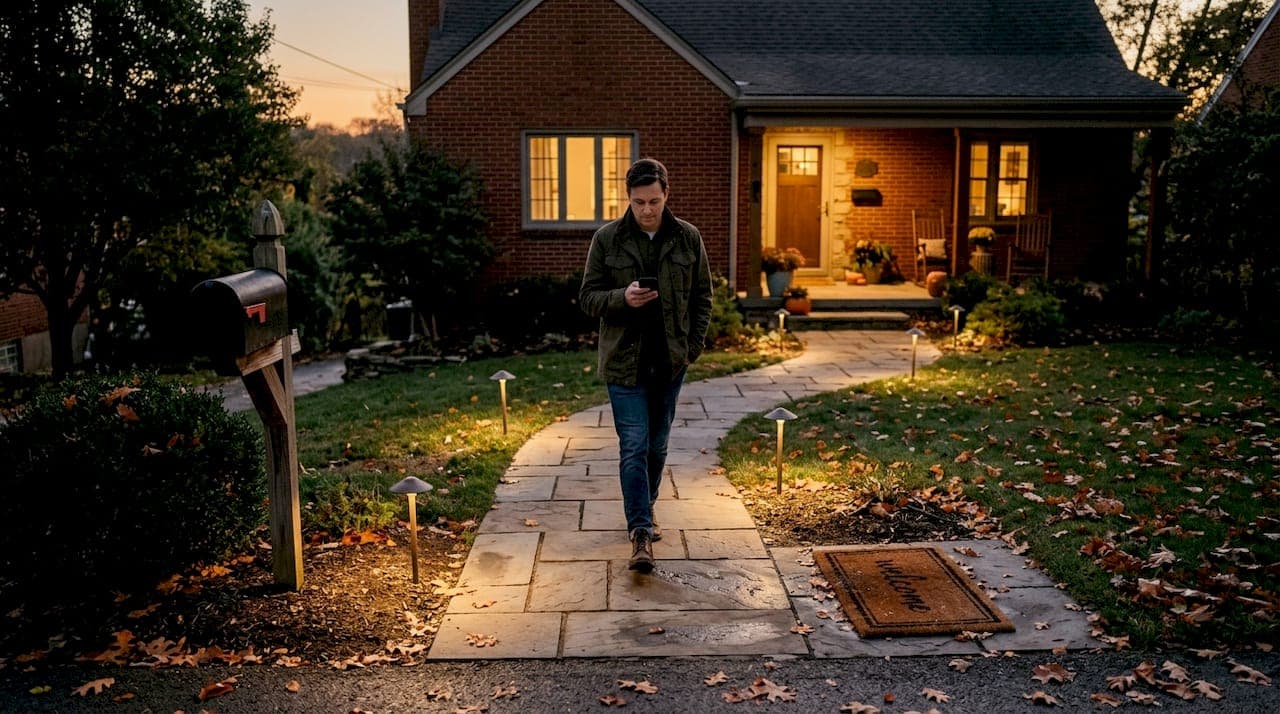
Most homeowners in Pittsburgh install pathway lights as an afterthought, picking up a solar kit at the hardware store and calling it done. The result? Dim, uneven coverage that creates trip hazards instead of preventing them. Proper lighting reduces trip hazards and boosts curb appeal without driving up energy costs when it's done right with LEDs. This guide breaks down what pathway lighting actually means, the safety benchmarks your home should meet, and how to design a system that looks stunning year-round — even through Pittsburgh's brutal winters and steep terrain.
Table of Contents
- What is pathway lighting? Key definitions and homeowner impact
- Pathway lighting for safety: Standards, stats, and real impact
- Designing the perfect layout: Placement, layering, and lighting combinations
- Choosing the right fixtures: Types, light color, and energy efficiency
- The overlooked realities of pathway lighting: Why Pittsburgh homes need expert design
- Ready to transform your walkways? Expert pathway lighting for Pittsburgh homes
- Frequently asked questions
Key Takeaways
| Point | Details |
|---|---|
| Critical for safety | Proper pathway lighting dramatically reduces trip hazards and nighttime accidents. |
| Professional design matters | Custom layouts built for Pittsburgh’s terrain and weather last longer and look better than generic kits. |
| Choose the right fixtures | Pick warm white (2700-3000K) lights with 40-100 lumens and energy-efficient LEDs for best results. |
| Boost curb appeal | Thoughtful pathway lighting increases home value and enhances your property’s welcoming feel. |
What is pathway lighting? Key definitions and homeowner impact
Pathway lighting refers to a dedicated system of low-level fixtures placed along walkways, driveways, garden paths, and entry points to guide foot traffic safely and highlight the visual lines of your property. Unlike flood lights or security spotlights, pathway lights are designed to cast controlled, ground-level illumination rather than blasting a wide area with harsh brightness. The goal is precision, not power.
For Pittsburgh homeowners, this distinction matters a lot. The value of outdoor lighting goes well beyond looks. A well-designed pathway system reduces your liability if a guest trips on your front walk, increases your home's perceived value at night, and signals to would-be intruders that your property is well-maintained and watched. These are real, practical benefits.
Here are the core features that define a quality pathway lighting system:
- Fixture type: Bollard posts, lantern-style stakes, recessed ground lights, or step lights
- Light temperature: Measured in Kelvin (K), warm white ranges from 2700K to 3000K for a welcoming feel
- Lumens: The actual brightness output per fixture, ideally 40 to 100 lumens for residential pathways
- Controls: Timer-based, dusk-to-dawn sensors, or smart home integration
- Wiring: Low-voltage systems are standard for residential use and are far safer than line-voltage setups
Pittsburgh's climate adds unique complexity here. Freeze-thaw cycles cause ground movement that can shift or crack fixtures. The city's famously hilly terrain creates uneven surfaces where lighting placement must account for grade changes, shadows, and sight lines. Generic kits simply aren't designed for this. Expert methodologies prioritize staggered placement and custom design tailored to local terrain, weather, and codes.
"Pathway lighting is not just decoration. It defines the edge of safe movement after dark and communicates to everyone approaching your home that they are expected and welcome."
Pro Tip: Before purchasing any fixtures, walk your path at night with a flashlight held at hip height. This simulates what pathway light actually illuminates and reveals dark zones, uneven grades, and potential trip points you'd otherwise miss.
When done professionally, you can also upgrade exterior lighting to create a cohesive visual language across your entire property, not just the walkway.
Pathway lighting for safety: Standards, stats, and real impact
Safety is where pathway lighting earns its keep. Most homeowners think about aesthetics first, but the engineering data tells a more compelling story. Every 1 lux increase cuts nighttime crashes by 7 to 21 percent, and areas with less than 5 lux are classified as high crash-risk zones. For pedestrian detection, the optimal target is 10 lux vertical illuminance.
Lux and lumens are related but different. Lumens measure the total light output of a bulb. Lux measures how much of that light actually lands on a surface per square meter. You can have a bright fixture that spreads light poorly and still fall short of the 10 lux benchmark that matters for safety.
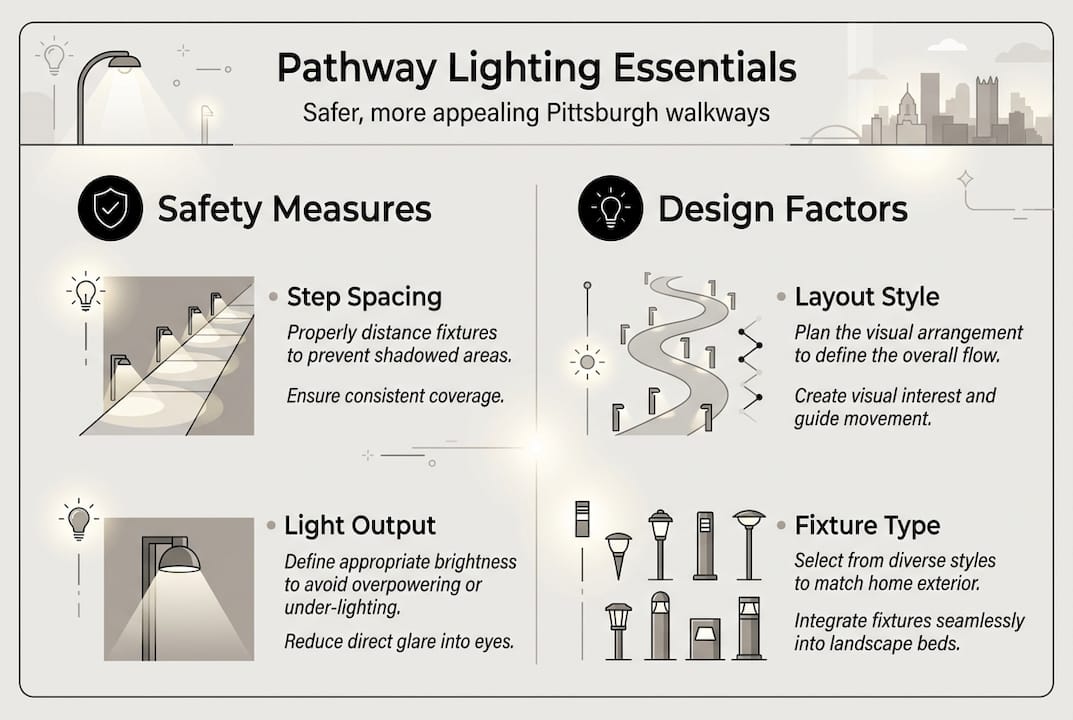
Here's a quick reference for what different lighting levels actually mean in practice:
| Illuminance Level | Lux Value | Real-World Risk |
|---|---|---|
| Too dim | Under 5 lux | High trip and crash risk |
| Minimum acceptable | 5 to 8 lux | Limited pedestrian detection |
| Optimal safety zone | 10 lux vertical | Clear visibility, safe movement |
| Over-lit | Above 20 lux | Glare, reduced contrast, discomfort |
Avoid safety lighting mistakes like spacing fixtures too far apart or choosing the wrong mounting height. Both errors create dark pockets between lights, which is exactly where accidents happen.
Common accident types that proper pathway lighting prevents include:
- Tripping on uneven pavers or steps due to lack of edge definition
- Slipping on icy or wet surfaces when the surface texture isn't visible
- Misjudging a grade change on sloped driveways or hillside entries
- Collisions with low obstacles like planters, curbs, or hose reels
Layered lighting amplifies safety. Combining pathway fixtures with motion-activated lighting at entry points creates redundancy, so if a pathway light fails, the motion sensor picks up the gap. This is especially valuable in Pittsburgh winters when ice accumulates quickly and visibility drops.
For additional permanent lighting security tips, pairing pathway systems with architectural or roofline lighting creates a layered effect that deters trespassers while keeping your property looking polished.
Designing the perfect layout: Placement, layering, and lighting combinations
A great pathway lighting design is less about the individual fixtures and more about how they work together. The two most debated layout approaches are staggered and straight-line placement.
| Layout Style | Visual Effect | Best Use Case |
|---|---|---|
| Straight-line | Formal, symmetrical | Flat driveways, formal front entries |
| Staggered/offset | Natural, rhythmic depth | Garden paths, sloped terrain, curves |
Staggered placement almost always wins for Pittsburgh homes. Tighter spacing at steps and turns is best practice, with fixtures placed every 5 to 6 feet at grade changes and 6 to 8 feet on flat, straight runs. This rhythm draws the eye naturally and eliminates the dark pockets that straight-line spacing can create.
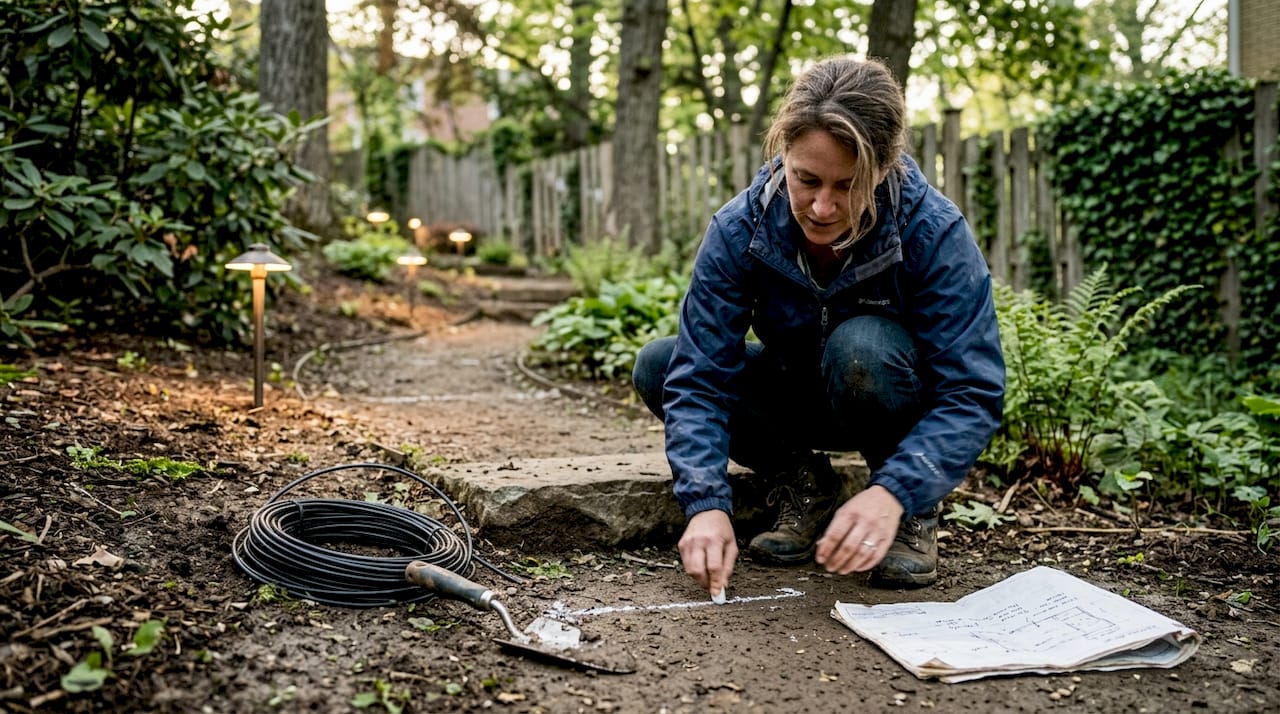
Layering is what separates a good design from a great one. Pathway lights handle the ground-level task, but adding low-wattage up-lighting on nearby shrubs or trees creates visual depth. Check out how professional design features combine these techniques to produce results that look intentional rather than installed.
Here is a quick design checklist for Pittsburgh homeowners:
- Map every grade change, step, and curve along your path before placing a single fixture
- Mark your darkest zones at night to prioritize fixture locations
- Choose fixtures rated for freeze-thaw conditions (IP65 or higher waterproofing)
- Plan wiring runs along the edge of the path to avoid future disruption
- Test your layout with temporary stakes before committing to permanent installation
- Check local Pittsburgh ordinances on exterior lighting, especially near property lines
For illuminating exteriors on homes with complex facades or multi-level yards, professional coordination between pathway fixtures and architectural lights is critical. The goal is visual continuity, not a patchwork of mismatched products.
Pro Tip: On hilly Pittsburgh properties, always light downhill first. Your eye naturally follows a path in the direction of travel, so lighting the lower portions of your path more brightly pulls attention and foot traffic safely forward.
If you want to skip the guesswork entirely, landscape lighting solutions from a local expert who knows Pittsburgh's terrain can save hours of trial-and-error and deliver results that hold up through every season. Also consider exploring permanent outdoor LED lighting options that eliminate the annual setup headache of seasonal systems.
Choosing the right fixtures: Types, light color, and energy efficiency
Fixture selection is where a lot of homeowners make expensive mistakes. The most common error is buying based on looks alone without checking the lumen output or weather rating. A beautiful lantern-style fixture that puts out 20 lumens is essentially a decoration, not a safety tool.
Residential pathway lights target 40 to 100 lumens per fixture and a warm white color temperature of 2700 to 3000K. Anything cooler than 3000K starts to look clinical and harsh, which undermines the welcoming atmosphere most homeowners want. Anything above 100 lumens per fixture risks creating glare that actually worsens visibility.
Here are the main fixture types suited for Pittsburgh homes:
- Bollard lights: Tall, post-style fixtures that cast light downward and sideways, great for wide driveways and formal entries
- Lantern stakes: Traditional look with a warm glow, ideal for garden paths and cottage-style homes
- Solar integrated LED: No wiring required, but performance drops significantly in Pittsburgh's gray winters
- Low-voltage LED path lights: The most reliable and energy-efficient choice for consistent, year-round performance
- Step lights: Recessed into risers or walls, perfect for multi-level yards and entry staircases
For Pittsburgh specifically, look for fixtures with an IP65 weather rating or better. IP65 means the fixture is fully protected against dust and water jets from any direction. This matters enormously when ice and road salt spray reaches your walkways from February through April.
Exploring your fixture options with a professional ensures you match the right product to your home's specific style and terrain. You can also learn how nightscape lighting tips combine pathway and accent fixtures into a cohesive nighttime scene.
LED fixtures are the clear winner on efficiency. They use up to 75 percent less energy than incandescent alternatives and last dramatically longer. Avoid the temptation to buy cheap solar-only kits. Pittsburgh averages only about 59 sunny days per year, which means solar-only systems regularly run dim or dead through winter. See additional outdoor lighting installation tips for guidance on combining fixture types without creating visual clutter.
The overlooked realities of pathway lighting: Why Pittsburgh homes need expert design
Here's the uncomfortable truth: most plug-and-play pathway kits are designed for flat, mild-climate suburbs. They assume stable ground, consistent sunlight, and standard spacing across a level lawn. Pittsburgh offers none of that.
The city's freeze-thaw cycle can shift the ground several inches over a single winter, tilting fixtures and pulling low-voltage wiring loose. Generic stakes aren't anchored for this. The corrugated terrain of neighborhoods like Mount Washington or Fox Chapel creates sight-line challenges that no standard kit accounts for.
Professional design addresses these realities before the first fixture goes in the ground. It means selecting mounts rated for ground movement, routing wiring to avoid frost-heave zones, and calibrating light output based on your actual path geometry. Layered pathway lighting systems enhance curb appeal and home value without high energy costs, but only when the underlying design is solid.
At Myriad Lighting, we've seen homeowners spend $400 on a kit that needs replacing within 18 months. The fixtures tilt, the solar panels underperform, and the wiring corrodes. A professionally installed system with quality components and proper grounding outlasts those kits by years. Understanding why professional design matters is the first step toward making a smarter investment for your Pittsburgh home.
Ready to transform your walkways? Expert pathway lighting for Pittsburgh homes
Now that you know what separates a great pathway lighting system from a frustrating one, the smartest move is connecting with someone who does this every day in Pittsburgh.

At Myriad Lighting, we design and install pathway lighting systems tailored specifically to Pittsburgh's terrain, climate, and code requirements. Every project starts with a consultation where we assess your property's unique layout, grade changes, and existing exterior features. Our landscape lighting experts handle everything from fixture selection to final wiring, with hidden conduit runs and zero disruption to your landscaping. We also offer custom lighting designs that integrate pathway lights with architectural and roofline systems for a fully cohesive look. Energy-efficient LEDs keep long-term operating costs low. Schedule your consultation today and let's build something that lasts.
Frequently asked questions
How far apart should pathway lights be installed?
Staggered or offset placement with tighter spacing at steps and turns is best practice. Experts recommend 5 to 8 feet apart on straight runs, and 5 to 6 feet at curves or grade changes for both safety and visual rhythm.
What is the best light color for pathway lighting?
A warm white color temperature of 2700 to 3000K creates a welcoming atmosphere while improving nighttime visibility without the harsh, clinical look of cooler whites.
How bright should pathway lights be for safety?
Each fixture should deliver 40 to 100 lumens, with a combined vertical illuminance of at least 10 lux across the walkway surface for reliable pedestrian detection and accident prevention.
Can pathway lighting increase home value in Pittsburgh?
Yes. Layered systems boost curb appeal and home value without high energy costs thanks to LED efficiency, making professionally designed pathway lighting a strong return on investment in competitive Pittsburgh neighborhoods.