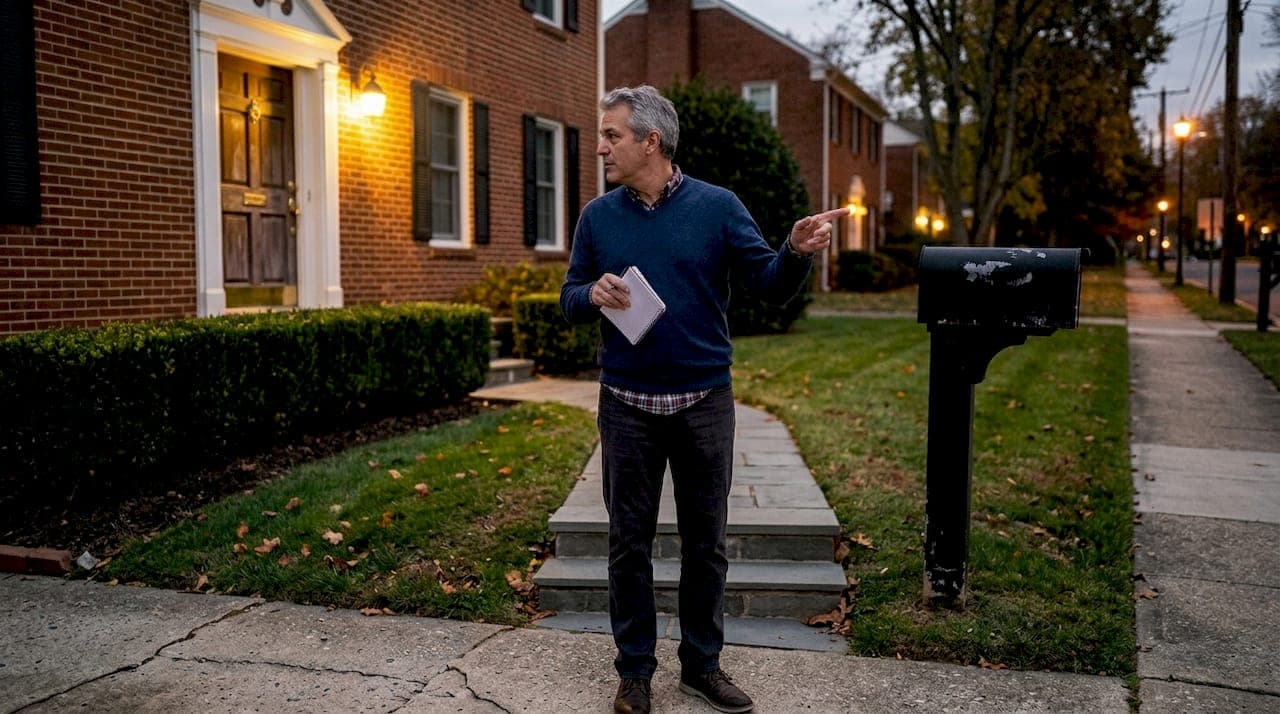
A poorly lit front walkway doesn't just look neglected — it creates real hazards and signals to every passerby that your home's potential is being wasted. Pittsburgh homeowners face a unique challenge: balancing dramatic seasonal changes, varied architectural styles, and the desire for a yard that looks stunning after sundown. With hundreds of fixture types, finish options, and technical specs competing for your attention, the selection process can feel paralyzing. This guide cuts through the noise. You'll learn exactly how to match fixtures to your needs, your home's style, and Pittsburgh's climate so that every light you install earns its place.
Table of Contents
- Assess your outdoor lighting needs and goals
- Understand fixture types and features
- Match lighting styles with your home and landscape
- Avoid common mistakes and make smart choices
- Our expert perspective: Why professional outdoor lighting transforms more than your curb appeal
- Bring your outdoor lighting vision to life with Myriad Lighting
- Frequently asked questions
Key Takeaways
| Point | Details |
|---|---|
| Clarify your lighting goals | Knowing whether you need lighting for safety, aesthetics, or both helps guide all fixture choices. |
| Select weather-ready fixtures | Choose materials and features that suit Pittsburgh's unique climate challenges. |
| Blend style and safety | Coordinate fixture design with home architecture and landscape for a seamless look and secure surroundings. |
| Avoid common mistakes | Plan placement, brightness, and features to sidestep frequent outdoor lighting errors. |
| Consult a professional for best results | Expert design and installation can enhance both safety and curb appeal while saving you costly re-dos. |
Assess your outdoor lighting needs and goals
Once you understand that the right lighting can truly transform your home's appeal and safety, the next step is to clarify exactly what your priorities are. Skipping this step is where most homeowners go wrong. They pick fixtures based on looks alone, only to find out later that their dark staircase is still a trip hazard or their beautifully landscaped garden disappears into shadow every night.
Start by dividing your lighting needs into two categories: functional and decorative. Functional lighting keeps people safe. Decorative lighting adds personality and curb appeal. The benefits of quality outdoor lighting include both improved safety and dramatically better first impressions, and the best systems deliver both at once.
Here are the key spaces to evaluate around your property:
- Driveways and parking areas: These need bright, consistent coverage so vehicles and pedestrians don't conflict.
- Front walkways and steps: High-traffic zones where lighting gaps cause falls.
- Entryways and front doors: Both a security zone and a style statement.
- Patios and decks: Spaces where ambiance matters as much as visibility.
- Garden beds, trees, and architectural features: Purely decorative but powerful for curb appeal.
- Side yards and back gates: Often overlooked but critical for perimeter security.
Walk your property at night before buying a single fixture. Take notes. Photograph the dark spots. You'll be surprised how many problem areas you've simply gotten used to ignoring.
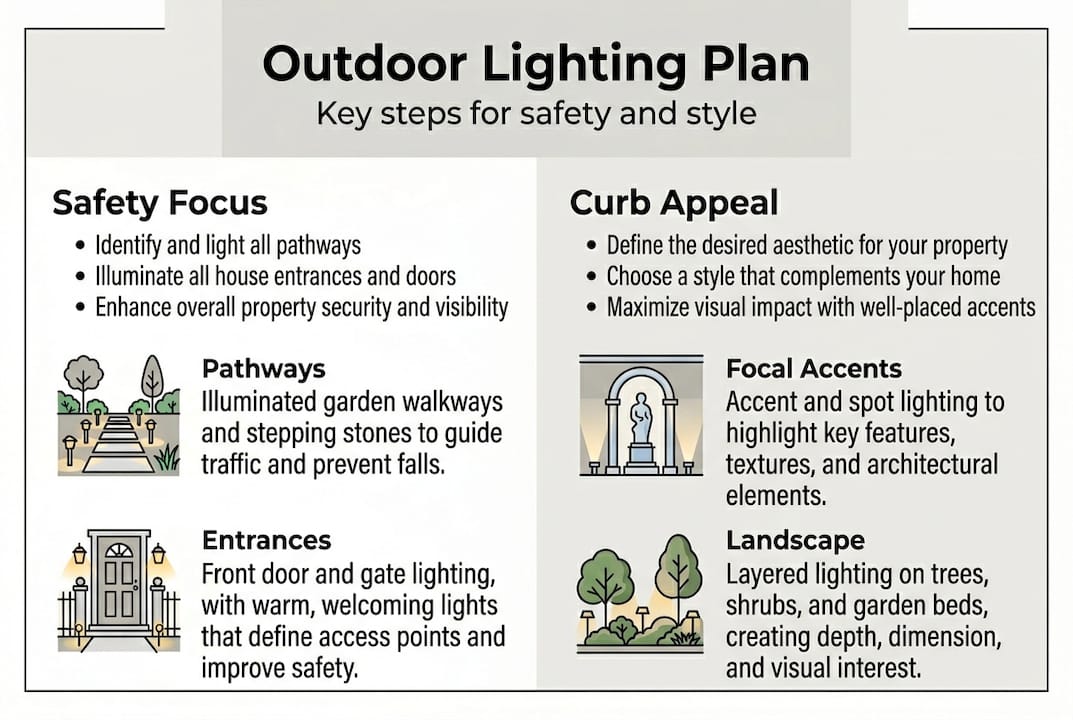
Pro Tip: Prioritize fixtures for high-traffic or risk-prone areas first. A beautifully lit garden means nothing if your front steps are still dangerous after dark.
Understand fixture types and features
Now that you know what you need from your lighting, it's time to match those needs with the right types of fixtures and features. Pittsburgh's weather adds an extra layer of complexity. Fixtures here need to handle freezing winters, humid summers, and everything in between without rusting, cracking, or failing prematurely.
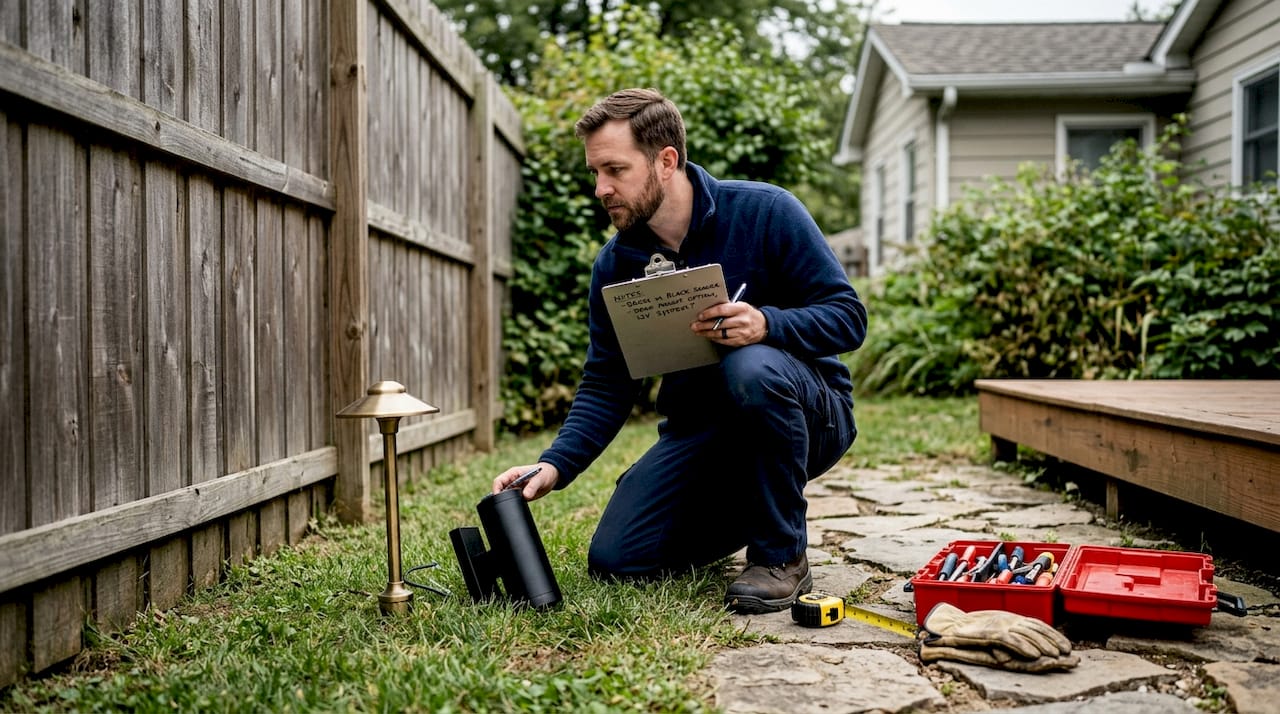
Here's a quick comparison of the most common outdoor fixture types:
| Fixture type | Best use | Key feature | Durability |
|---|---|---|---|
| Path lights | Walkways, garden edges | Low-level, directional glow | Moderate, varies by material |
| Spotlights | Trees, architecture, focal points | Intense directional beam | High when IP-rated |
| Wall lights | Entrances, garage doors | Wide, even coverage | High with weather seals |
| Motion-activated | Driveways, dark corners | Auto on/off for security | High, energy-efficient |
When reviewing any fixture, check these features before committing:
- IP rating: Look for IP65 or higher. This confirms protection against dust and heavy rain.
- LED efficiency: LEDs use up to 75% less energy than incandescent and last far longer.
- Dusk-to-dawn sensors: These automate your lighting so you never forget to turn it on.
- Material durability: Brass and stainless steel outlast aluminum in Pittsburgh's freeze-thaw cycles, though aluminum is a budget-friendly middle option.
Certain fixture features for Pittsburgh's climate are non-negotiable if you want your investment to last more than a couple of seasons. Don't overlook pool lighting for safety and style if your yard includes water features — those zones need specialist-rated fixtures.
Pro Tip: Choose fixtures with built-in timers or smart controls. You'll save energy, reduce bulb wear, and never come home to a dark driveway again.
Match lighting styles with your home and landscape
With an understanding of fixture types and technical features, you're ready to focus on design. This is the secret to fixtures looking like they were built just for your home rather than pulled from a generic catalog.
Pittsburgh's residential neighborhoods range from Federal Hill brick colonials to modern infill builds and craftsman bungalows. Each architectural style calls for a different lighting language. Here's how to align them:
| Home style | Recommended fixture style | Finish suggestion | Landscape pairing |
|---|---|---|---|
| Colonial/traditional | Lantern-style post and wall lights | Oil-rubbed bronze, black | Formal hedges, symmetrical beds |
| Craftsman/bungalow | Flush-mount with geometric details | Antique brass, aged copper | Mixed perennials, stone paths |
| Contemporary/modern | Sleek recessed or linear path lights | Brushed nickel, matte black | Ornamental grasses, minimalist beds |
| Rustic/farmhouse | Cage-style or barn wall lights | Weathered iron, dark bronze | Wildflowers, wood fencing |
Fixture finish and shape carry enormous visual weight. A brushed nickel path light next to a warm-toned brick facade will always feel slightly off. Exterior lighting for curb appeal works best when fixtures echo the home's existing hardware, trim color, and even window shapes.
Here are the top visual integration tips for blending fixtures seamlessly into your property:
- Match metal finishes to your door hardware and house numbers.
- Use fixture height to direct the eye — low path lights draw attention to landscaping, while taller post lights frame the home.
- Group fixtures in odd numbers for a natural, less manufactured appearance.
- Layer light sources at different heights for depth and dimension.
- Consider professional lighting features that are designed specifically for Pittsburgh homes and climates.
- Don't overlook seasonal accents — holiday lighting styles can complement your permanent fixtures beautifully when planned together.
Avoid common mistakes and make smart choices
Even the best-looking fixtures fall short if they're installed or selected incorrectly. Let's prevent the most frequent missteps Pittsburgh homeowners make.
These five mistakes show up again and again, and each one is completely avoidable with a bit of planning. Incorrect fixture placement is one of the leading causes of poor safety outcomes in residential outdoor lighting.
-
Choosing fixtures based only on appearance. A beautiful fixture that isn't rated for wet locations will fail within a season. Always verify the IP rating and material quality before you fall in love with a style.
-
Ignoring light direction and angles. Fixtures aimed too high create glare; too low and they miss the intended surface entirely. Test placement with a flashlight before committing to installation.
-
Over-lighting an area. More lumens does not mean more safety. Overly bright zones create harsh contrast that actually reduces visibility in adjacent darker areas.
-
Spacing fixtures inconsistently. Uneven spacing creates pools of light separated by shadows, which looks sloppy and creates new hazards between fixtures.
-
Skipping professional installation for complex circuits. Motion-activated lighting and multi-zone systems involve wiring that requires correct gauge, GFCI protection, and proper load balancing.
Safety warning: Never install indoor-rated fixtures in outdoor spaces, even under covered porches. Moisture infiltration can cause electrical shorts and fire hazards. Always use fixtures explicitly rated for wet or damp outdoor locations.
If you're questioning any part of the installation process, that's a clear signal to bring in a professional. The cost of an expert is far lower than rewiring a failed installation or, worse, dealing with a safety incident.
Our expert perspective: Why professional outdoor lighting transforms more than your curb appeal
Most homeowners focus on fixture style and forget that placement, layering, and smart controls are what separate a good lighting setup from a genuinely great one. We've seen it happen repeatedly: a homeowner picks beautiful fixtures, installs them according to the box instructions, and ends up with a result that looks flat, harsh, or just slightly off. The fixtures weren't the problem. The approach was.
Professional outdoor lighting design considers sight lines, focal hierarchy, and how light behaves on different surface textures at night. Brick absorbs light differently than painted siding. Wet leaves reflect it. These nuances are invisible in daylight and only reveal themselves after dark, which is exactly when they matter most.
DIY installations also tend to underestimate Pittsburgh's climate demands. A fixture that works fine in a mild climate can crack, corrode, or short out after one hard winter here. The professional design features built into expert installations account for all of this upfront. Small adjustments in beam angle, fixture height, and control programming create those unexpected "wow" moments that no generic solution can replicate. The investment pays back in longevity, safety, and an atmosphere that genuinely elevates your home.
Bring your outdoor lighting vision to life with Myriad Lighting
If you're ready to elevate your home's look and safety without the headache, Myriad Lighting is your local partner. We've spent years designing and installing outdoor lighting across Pittsburgh's most distinctive homes, and we know exactly how to make fixtures perform beautifully through every season this city throws at them.

Our team handles everything from initial design consultation to professional installation with hidden wiring and zero guesswork on your end. Whether you're interested in landscape lighting solutions to highlight your yard's best features or holiday lighting services that work seamlessly with your permanent fixtures, we'll build a system tailored to your home, your style, and your budget. Reach out today to schedule your free consultation and see what expert outdoor lighting looks like in person.
Frequently asked questions
What outdoor lighting fixtures are best for Pittsburgh's weather?
Look for fixtures rated for wet locations with durable materials like brass or stainless steel, built to handle temperature swings and humidity. Pittsburgh's climate demands weather-resistant construction and sealed connections to prevent premature failure.
Can outdoor lighting improve my home's security?
Yes, well-designed lighting deters intruders by eliminating hiding spots and improving surveillance visibility around entry points. Quality outdoor lighting directly improves both safety perception and actual security for your property.
How do I avoid glare or over-lighting?
Use shielded fixtures with appropriate lumen output for each zone, and space them consistently to avoid harsh contrasts. Incorrect placement and over-bright fixtures are the two most common causes of uncomfortable glare in residential outdoor lighting.
Are LED outdoor lights worth the investment?
Absolutely. LEDs use significantly less energy, last years longer than traditional bulbs, and perform reliably in the temperature extremes Pittsburgh regularly delivers. The energy efficiency of LED fixtures makes them the clear choice for both budget-conscious and environmentally aware homeowners.
Recommended
- How to illuminate building exteriors for stunning curb appeal
- Avoid These Outdoor Lighting Mistakes for a Safer Home
- How quality outdoor lighting enhances Pittsburgh homes
- Hardscape/Landscape | Transform Your Outdoors Today — Myriad Lighting
- How to install outdoor lighting for curb appeal in Calgary