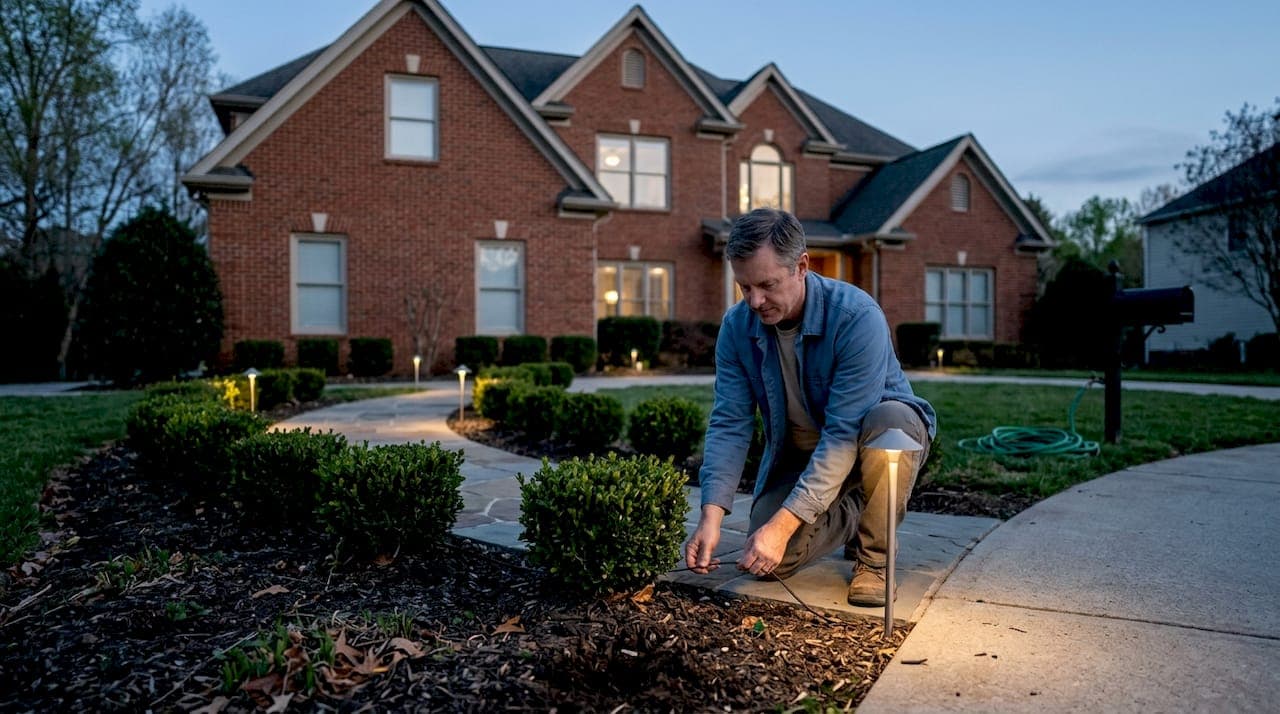
You spend real money on landscaping, fresh paint, and a well-kept lawn, then you look at your house at night and see a tangle of black cords snaking across your mulch beds. It kills the effect instantly. Hidden wiring in outdoor lighting refers to techniques for concealing electrical cables, primarily low-voltage landscape lighting wires, to achieve a clean, hazard-free aesthetic that actually matches the care you put into your Pittsburgh home's exterior. This guide breaks down what hidden wiring is, which methods work best for local properties, what the codes say, and how to get a truly polished result.
Table of Contents
- What is hidden wiring in outdoor lighting?
- Popular methods for concealing outdoor lighting wires
- Safety codes and best practices for Pittsburgh homes
- DIY tips and common mistakes to avoid
- Expert perspective: The hidden value of professional outdoor wiring
- Transform your property with seamless landscape lighting
- Frequently asked questions
Key Takeaways
| Point | Details |
|---|---|
| Clean, safe appearance | Hidden wiring eliminates clutter and reduces hazards in your outdoor space. |
| Multiple concealment options | You can hide wires using mulch, conduits, architectural features, and more to match your landscape. |
| Follow local codes | Check Pittsburgh and NEC codes to ensure your outdoor lighting project is safe and compliant. |
| DIY-friendly for low-voltage | Most Pittsburgh homeowners can safely install low-voltage hidden wiring if they avoid common mistakes. |
| Pros add extra value | For best results or complex setups, consider hiring a local expert to maximize beauty and safety. |
What is hidden wiring in outdoor lighting?
Exposed wires do two things you do not want: they look sloppy, and they create real risks. A wire running across a garden path can trip a child, get chewed by a pet, or degrade faster when left exposed to Pittsburgh's freeze-thaw cycles and summer heat. Hidden wiring solves both problems at once.
At its core, hidden wiring means routing your outdoor lighting cables out of sight, whether underground, behind architectural features, inside protective conduit, or beneath deck structures. The goal is a finished installation where every light appears to float perfectly in place with no visible supply line.
Landscape, deck, and path lighting systems are the most common applications for wire concealment techniques, and for good reason. These are the zones where cables must travel long distances across visible surfaces to reach individual fixtures. When done right, the result is a professional, magazine-worthy look that also keeps your family and pets protected.
Here are the primary locations where hidden wiring makes the biggest impact:
- Landscape beds and mulch areas: Cables buried just a few inches under mulch disappear completely while staying accessible if you ever need to adjust the layout.
- Pathways and stepping stones: Wires run beneath the edge of pavers or under gravel create a seamless path lighting effect.
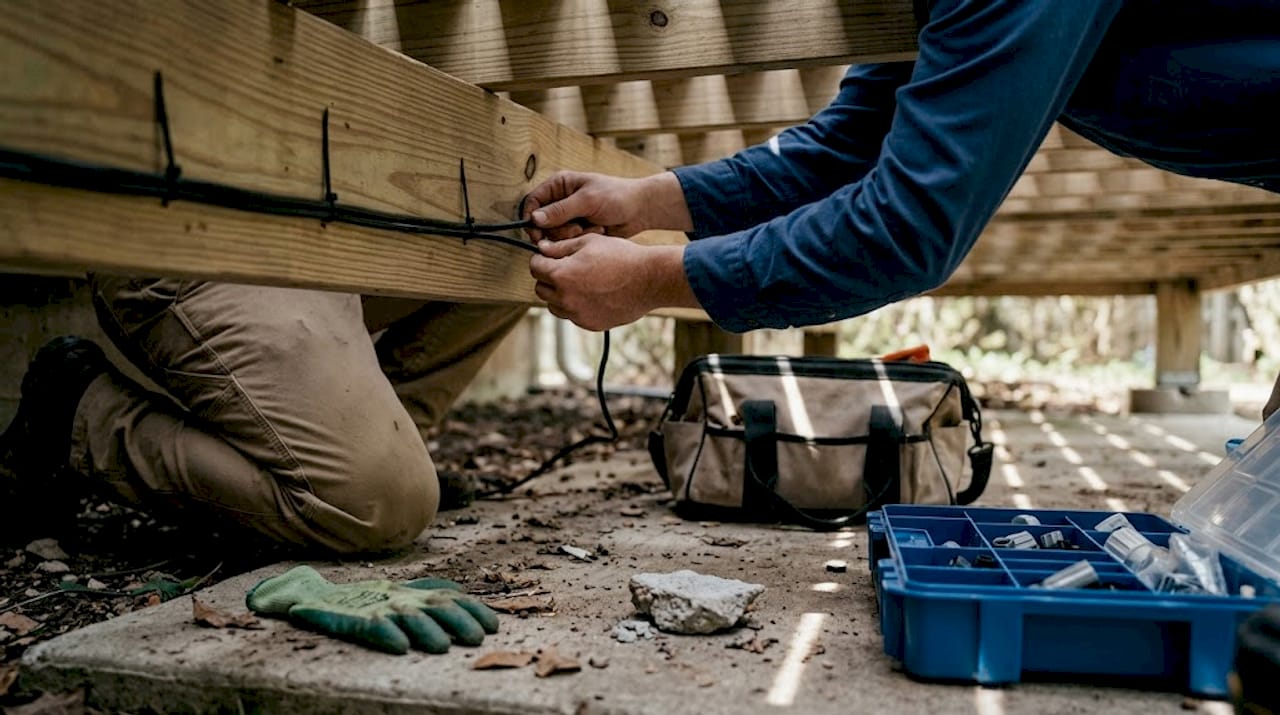
- Deck and patio perimeters: Cables tucked under joists or through deck framing power post cap lights and step lights invisibly.
- Hardscape and retaining walls: Wires routed through cores or behind capstones keep wall-wash and uplighting looking intentional rather than improvised.
"Well-executed hidden wiring isn't just about aesthetics—it's the difference between a lighting system that ages gracefully and one that looks tired within a season."
If you want to understand the range of landscape lighting methods available for Pittsburgh properties, exploring your options before installation puts you ahead of the process.
Popular methods for concealing outdoor lighting wires
There is no single way to hide outdoor wiring. The right method depends on your property's layout, the fixture types you're using, and how finished you want the result to look. Pittsburgh homes vary widely, from brick colonials with mature trees to newer construction with clean hardscape lines, and each calls for a slightly different approach.
Running wires under deck joists, behind shrubs, through PVC raceways, or behind architectural features covers the main strategies most contractors and confident DIYers rely on. Here is a detailed comparison of the most popular methods:
| Method | Best used for | Difficulty | Key benefit |
|---|---|---|---|
| Shallow trench burial | Lawn areas, mulch beds | Easy | Fully hidden, long-lasting |
| PVC conduit raceway | Above-ground runs | Easy to moderate | Protects wire, paintable |
| Under deck routing | Deck perimeters, step lights | Moderate | No digging needed |
| Behind downspouts | Roofline or wall fixtures | Easy | Uses existing features |
| Through soffits | Eave-mounted or roofline lights | Moderate | Completely invisible |
| Pavement slot cutting | Driveways, sidewalks | Hard | Fully recessed look |
Here is a step-by-step approach to the two most popular methods for Pittsburgh homeowners:
-
Shallow trench burial in mulch or grass: Use a flat spade or a purpose-built wire trenching tool to cut a 4-to-6-inch channel along your planned route. Lay the wire at the bottom, press the trench closed, and top with mulch. This works beautifully along garden beds and is easy to undo if your layout needs to change.
-
PVC conduit on hard surfaces: When wire must run along a foundation, wall, or fence, snap your cable inside a rigid or flexible PVC raceway. Paint the raceway to match your siding or trim color before installation. From ten feet away, it disappears completely against the wall.
-
Under-deck and through-soffit routing: Secure cables to the underside of deck joists using UV-rated cable clips. For soffits, a fish tape makes it straightforward to pull wire from the transformer location to the fixture without cutting into drywall or siding.
-
Behind architectural features: Downspouts, porch columns, and fence posts all provide natural channels for running wire vertically. Use clips or zip ties to keep the cable flush against the surface on its way to buried ground runs.
Pro Tip: Before you finalize your trench routes, sketch your layout on paper and identify every point where wires will cross a path or driveway. Planning those crossings in advance lets you install conduit sleeves before laying pavers, saving you from cutting concrete later.
The Pittsburgh outdoor lighting installation process is worth reviewing so you understand the sequence of decisions from transformer placement to final fixture positioning.
Safety codes and best practices for Pittsburgh homes
Hidden wiring looks great, but it has to be done safely. This is where a lot of homeowners miss important steps, especially when mixing low-voltage and line-voltage systems or when digging near buried utilities.
Burial depth guidelines:
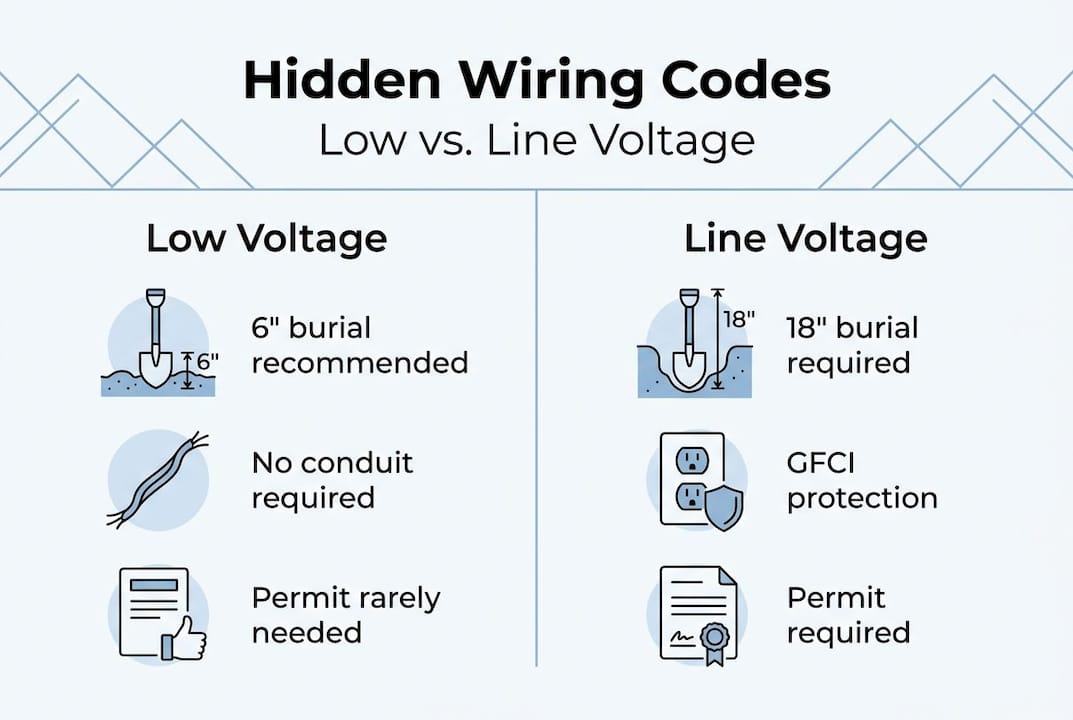
The National Electrical Code requires no minimum burial depth for listed low-voltage landscape wire, but 6 inches is the widely accepted best practice for protection against foot traffic, shovels, and root growth. If wire crosses under a driveway or sidewalk, the standard jumps to 18 inches and conduit is strongly recommended to protect against vehicle loads and frost heave.
| Situation | Recommended burial depth | Conduit required? |
|---|---|---|
| Open lawn or mulch bed | 6 inches | No (but helpful) |
| Under a walkway or path | 6 to 12 inches | Recommended |
| Under a driveway | 18 inches | Yes |
| 120V line-voltage runs | 12 to 24 inches | Yes |
GFCI protection for 120V systems:
If your project involves any standard 120V outdoor circuits, code requires GFCI (ground fault circuit interrupter) protection at every outlet. GFCI outlets cut power within milliseconds when they detect a fault, making them critical near water features, rain, and wet soil. This is non-negotiable, not just recommended.
Low-voltage vs. line-voltage: what changes?
Low-voltage (12V) systems typically do not require a permit in Pittsburgh, but municipal code varies, so confirm with your local building department before starting. Line-voltage projects almost always require a permit and inspection. The practical takeaway: if you are handling low-voltage landscape lighting with a plug-in transformer, you are in far simpler territory from a permitting standpoint. The moment you are wiring new circuits or outlets, bring in a licensed electrician.
Call 811 before you dig:
This step saves lives and avoids expensive repairs. Pennsylvania's 811 system (PA One Call) will mark the location of buried gas, water, electric, and telecom lines before you dig. The service is free and required by law. Wait for all markings to be confirmed before you put a shovel in the ground.
Pro Tip: Take photos of every buried wire run before covering them. Store the photos on your phone or in a home file so future landscaping or digging projects don't accidentally cut through your system.
Always review the outdoor lighting install guide for a full breakdown of what Pittsburgh homeowners need to know before starting any installation project.
DIY tips and common mistakes to avoid
Low-voltage outdoor lighting is genuinely approachable for motivated homeowners. Low-voltage systems are safer and more DIY-friendly than their line-voltage counterparts because there is no shock risk from the wire itself, and mistakes are usually fixable without calling an electrician. That said, there are patterns we see repeatedly where projects go sideways.
Plan your wire runs before you buy anything:
Measure each run from the transformer to the farthest fixture. Add 10 to 15 percent for curves, dips, and routing around obstacles. Underestimating wire length means splicing in the middle of a run, which introduces connection points that can fail over time, especially in Pittsburgh's wet winters.
Test before you bury:
Test the system fully before burying any wire, and use heavier 10 AWG wire for runs longer than 100 feet to minimize voltage drop. Voltage drop is what happens when wire resistance causes the lights at the end of a long run to glow dimmer than the ones near the transformer. A quick test with everything laid on top of the ground tells you exactly where you stand before any dirt is moved.
Match wire gauge to run length:
- Runs under 50 feet: 16 AWG wire is usually sufficient
- Runs 50 to 100 feet: Step up to 14 AWG
- Runs over 100 feet: Use 12 or 10 AWG for consistent brightness across the system
Here are the most common mistakes that cause problems down the road:
- Routing wire under high-traffic areas without conduit: Foot traffic and lawn equipment compress and eventually cut unprotected wire.
- Ignoring tree roots: Roots grow. A wire that fits snugly alongside a root today may be pinched or severed in three years.
- Overloading the transformer: Each fixture draws wattage, and exceeding your transformer's rated load causes overheating and early failure. Leave at least 20 percent headroom.
- Using indoor-rated extension cords as a temporary fix: "Temporary" outdoor cords often stay permanent and degrade quickly when exposed to moisture and UV light.
- Skipping connector waterproofing: Outdoor wire connectors need weatherproof gel-filled connectors or heat-shrink tubing to stay reliable through Pittsburgh rain and snow.
Reviewing common outdoor lighting mistakes before you start can save you from redoing work that would have been simple to get right the first time. When you are ready to think about layout strategy, custom lighting layout tips offer a strong framework for placing fixtures to maximize nighttime curb appeal.
Pro Tip: Buy 10 to 20 percent more wire than your measurements suggest. Running short mid-project causes unnecessary splices and delays, and the leftover wire is useful for future additions or repairs.
Expert perspective: The hidden value of professional outdoor wiring
Here is something most DIY guides won't tell you: the hidden wiring itself is rarely the hard part. What's genuinely difficult is designing a layout that looks deliberate and beautiful, not just functional and tidy.
We see this constantly in Pittsburgh. A homeowner buries all their wires perfectly, avoids every code issue, and ends up with a system that still looks underwhelming at night because the fixture placement prioritizes convenience over visual impact. The transformer ends up in the most obvious spot. The uplights are aimed straight up instead of at the best angle to accent texture. The path lights are spaced too evenly and look like a runway instead of a natural guide.
Professional installation is not about wire concealment alone. It is about knowing how light interacts with Pittsburgh's stone facades, how to layer brightness levels for depth, and how lighting controls can transform a static scene into something responsive and dynamic. Timed and zoned systems let you shift from a welcoming warm glow for evening guests to a security-focused full-brightness mode automatically.
Sloped yards, which are common throughout Pittsburgh's hillside neighborhoods, create real routing challenges that require creative solutions. Running wire on a slope without proper anchoring causes it to shift and surface over time. Architectural features like bay windows, brick coursing, and complex rooflines require routing decisions that an experienced installer can spot immediately but that take a DIYer several frustrating attempts to figure out.
The honest take: if you have a small front path or a simple garden bed to light, DIY is absolutely the right call. But when the project grows to cover a full property, mixing fixture types and power zones, the value of professional design and installation compounds quickly. You get a better-looking result, a system that will last longer, and the peace of mind that comes with knowing every buried connection is code-compliant and weatherproofed correctly.
Transform your property with seamless landscape lighting
There is a significant difference between a lighting system that simply works and one that genuinely elevates your home's presence at night. If you want zero visible wires, beautiful fixture placement, and a system built to handle Pittsburgh's climate year after year, expert help makes that much easier to achieve.

At Myriad Lighting, we specialize in custom, code-compliant outdoor lighting installations for Pittsburgh homeowners who want results that look truly intentional. Our team handles everything from transformer placement to final trench closure, with hidden wiring as a standard part of every installation, not an upgrade. Whether you want to transform your landscape lighting in Pittsburgh or brighten up a special event with event and wedding lighting, we bring the same care and precision to every project. Schedule your free consultation and see what your property looks like when every detail is done right.
Frequently asked questions
Are permits required for installing hidden outdoor lighting wiring in Pittsburgh?
Permits are typically not needed for low-voltage (12V) wiring, but requirements can vary by municipality, so always confirm with your local building department before starting work.
How deep should outdoor lighting wires be buried?
No NEC burial depth is required for listed low-voltage wire, but 6 inches is the accepted best practice, and wire crossing under driveways should go at least 18 inches deep inside conduit.
Can I hide outdoor lighting wires myself or do I need an electrician?
Low-voltage wiring is DIY-friendly and safe for most homeowners, but 120V line-voltage systems require permits, GFCI protection, and deeper burial, so hiring a licensed electrician is the right move for those.
What are the most common ways to hide wires around hardscape or paths?
Wiring techniques for paths and hardscape include running cables under pavers, behind edging, through mulch beds, or tucked under rocks and decorative landscape features for a clean finish.
Do hidden wires affect the performance of outdoor lights?
When installed with the correct wire gauge, hidden wiring does not reduce performance. Use 10 AWG wire for long runs to prevent voltage drop, which is the main cause of dimmer-than-expected lights at the far end of a circuit.