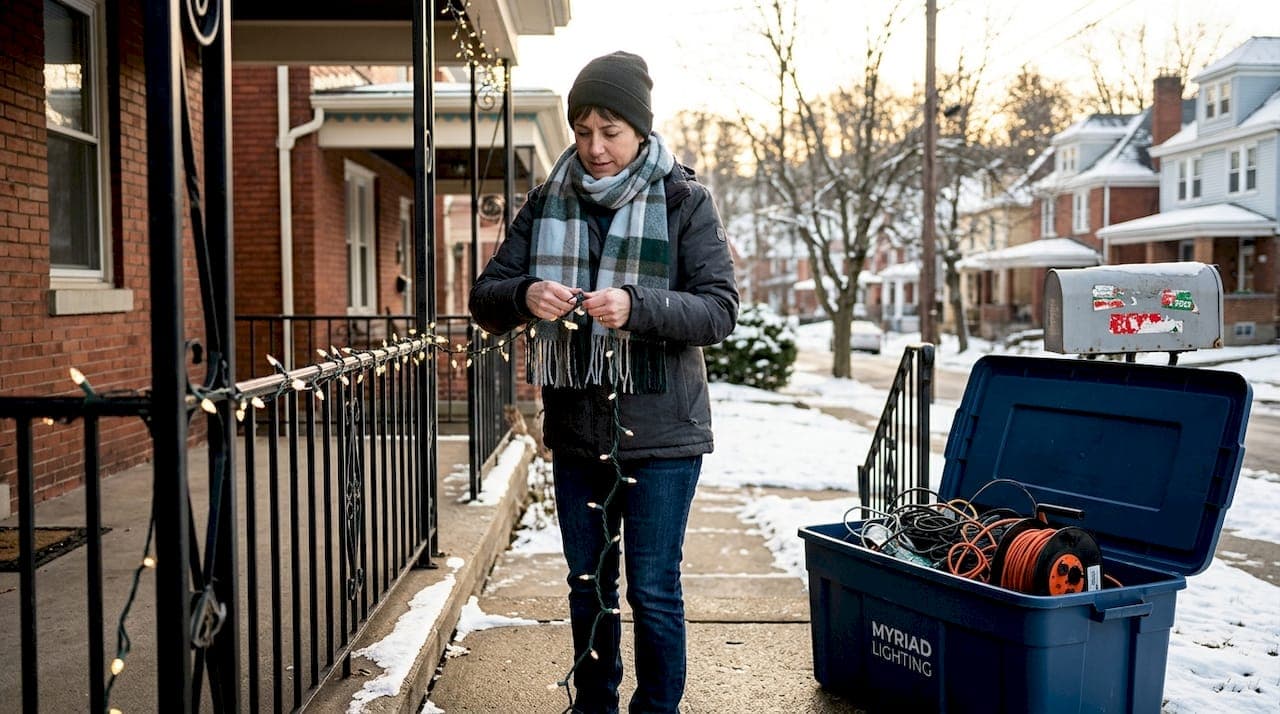
Every winter, Pittsburgh homeowners face the same annual puzzle: how do you create a truly festive outdoor display when temperatures drop, ice forms on rooflines, and unexpected snowstorms hit before you even finish hanging the last strand? Getting holiday lighting right here isn't just about picking pretty colors. It's about balancing real visual impact, energy efficiency, and personal safety across a season that can be brutally unpredictable. This guide walks you through smart lighting choices, proven safety practices, and inspired ideas that actually work for Pittsburgh homes and winters.
Table of Contents
- How to choose the right holiday lights for your home
- Top 7 holiday lighting ideas for Pittsburgh curb appeal
- LED vs. incandescent lights: A practical holiday comparison
- Safety and installation tips for Pittsburgh's winter
- Why festive curb appeal starts long before you hang your first light
- Bring festive lighting to life with expert help
- Frequently asked questions
Key Takeaways
| Point | Details |
|---|---|
| Safety first | Always inspect and use outdoor-rated equipment for holiday lighting displays. |
| Choose LED for savings | LED lights cut energy bills by up to 90% and last longer in harsh Pittsburgh winters. |
| Mix styles for impact | Combine roof, walkway, and tree lighting for inviting curb appeal. |
| Plan before you hang | A clear lighting plan prevents common pitfalls and creates a professional look. |
| Hire experts for big jobs | Consider professionals for complex installations or safety concerns around your home. |
How to choose the right holiday lights for your home
With a clear understanding of why planning matters, here's how to select the right lights for your unique needs.
The first question most homeowners ask is, "What kind of lights should I buy?" The honest answer depends on three factors: your home's architecture, your local weather exposure, and your budget for both purchase and operation. Pittsburgh homes range from Craftsman bungalows in Shadyside to brick colonials in Mt. Lebanon, and each style responds differently to various lighting approaches.
When browsing options, knowing how to select outdoor lighting fixtures for safety and curb appeal helps you avoid costly mistakes before you ever open a box. Here's what to evaluate before buying anything:
- Energy efficiency: LED string lights use a fraction of the power that incandescent options consume. If you plan to run lights six to eight hours a night, this matters for your monthly utility bill.
- Weatherproofing ratings: Look for lights labeled UL-listed for outdoor use. An IP44 or IP65 rating (ingress protection) means the fixture resists moisture and dust. This is non-negotiable in Pittsburgh's wet winters.
- Cord ratings: Outdoor-rated cords are thicker and insulated differently than indoor cords. Never substitute indoor extension cords for outdoor ones, even for a short display period.
- GFCI outlets: Ground fault circuit interrupter outlets automatically cut power if they detect a short or moisture intrusion. Most modern Pittsburgh homes have them on exterior walls, but if yours doesn't, have one installed before decorating season.
- Mounting hardware: Plastic gutter clips and roofline hooks are designed to hold light strings without puncturing shingles or gutters. Avoid nails or staples, which create entry points for water and can damage wiring.
Before installation, inspecting lights for frayed wires and cracks is essential. Using outdoor-rated cords, GFCI outlets, and clips instead of nails protects your home and family. Always work with a partner when on a ladder.
One common outdoor lighting mistake is placing lights where snow can bury exposed connections or where runoff from the roof drips directly onto a plug. Both situations create serious shock hazards. Keep all connection points elevated or sheltered whenever possible.
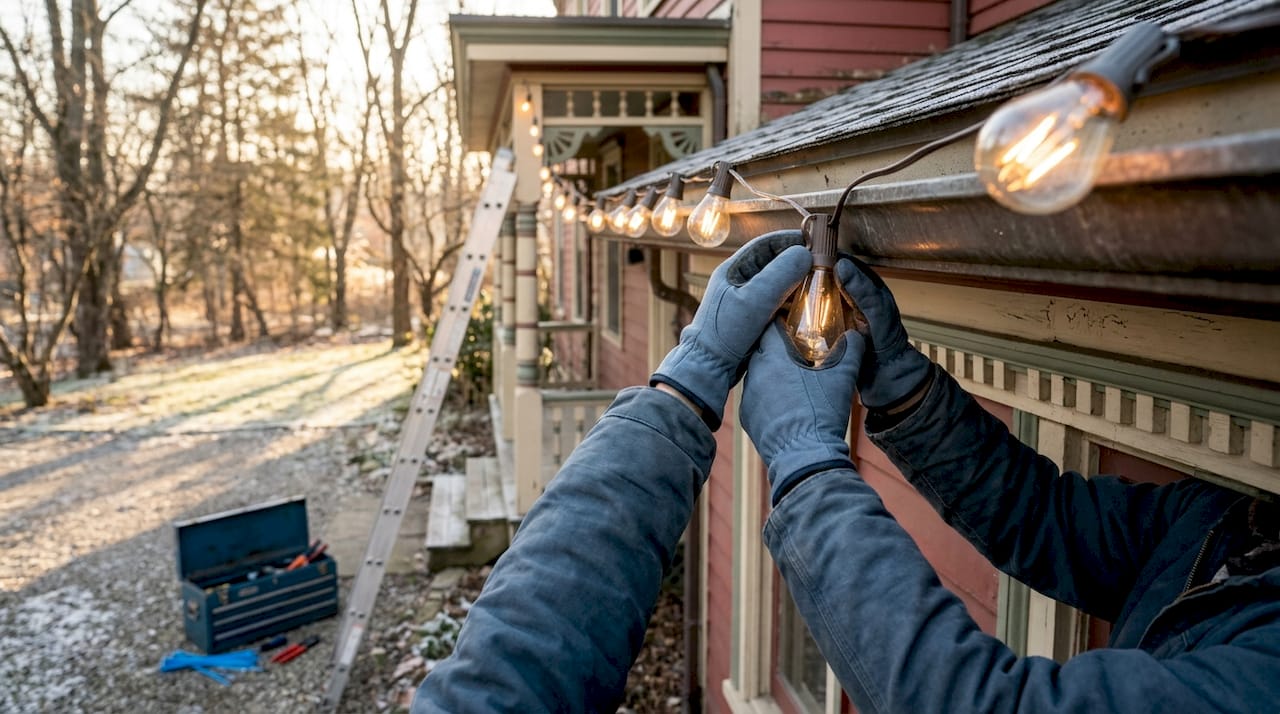
Pro Tip: Match the light string style to your home's architecture. Large, vintage-style Edison bulbs look stunning on Victorian or Craftsman homes. Tight mini LEDs work better on modern or contemporary facades with clean lines.
Top 7 holiday lighting ideas for Pittsburgh curb appeal
Armed with selection criteria, explore these standout lighting ideas to make your home the highlight of the neighborhood.
Pittsburgh's mix of architectural styles and tight residential streets creates a natural stage for holiday displays. The homes that stand out aren't necessarily the ones with the most lights. They're the ones with thoughtful placement, layered visual depth, and lighting that works with the structure rather than against it.
-
Roofline string lights: A classic for good reason. Running warm white or multi-color LEDs along your roofline creates a clean, structured look that reads beautifully from the street. Use gutter clips rated for the weight of your specific string type and keep runs to manageable lengths so one tripped breaker doesn't darken the whole display.
-
Walkway luminaries: Paper bag luminaries or LED lantern stakes placed along your front path create an inviting, warm glow that guides guests to your door. Modern solar-powered options eliminate the need for extension cords entirely, which is a real advantage in wet conditions.
-
Tree wraps: Spiral wrapping bare tree trunks and major branches with warm white LEDs transforms your yard's skeletal winter trees into glowing sculptures. Start at the base and work upward. Use flexible, outdoor-rated wire for tight wrapping without cracking the coating.
-
Porch displays: Your porch is the closest point of contact between your home and visitors. Combine string lights along the porch ceiling with lit garland on the railing for a layered, dimensional effect. Adding a few spotlights pointed at a wreath or door arrangement elevates the whole scene.
-
Fence outlines: If your property has a picket fence or iron fence along the front, outlining it with net lights or clip-on mini strings creates a defined perimeter that frames your yard beautifully and adds significant visual depth from the street.
-
Hardscape uplighting: Uplighting stone walls, pillars, or retaining walls with color-changing LED spots adds drama and dimension. This technique, used widely to illuminate building exteriors for maximum curb appeal, works equally well at holiday scale and can be repurposed for year-round use.
-
Themed LED figures: Deer, snowflakes, and star silhouettes made from LED wire frames are weatherproof and plug-and-play. Position them in open lawn areas where they can be seen clearly from the street without competing with structural lighting.
Pro recommendation: Never run light strings near branches that touch power lines or let plug connections sit in collected snow. Complex rooflines with steep pitches or dormer obstructions are best handled by professionals who have the right outdoor lighting installation equipment and fall protection. Safety first, always.
Pro Tip: Mix static and slow-twinkle modes within the same display. Static lights on your roofline create a stable anchor, while twinkle patterns in trees or bushes add movement and life. The contrast makes the whole display feel more dynamic without being overwhelming.
LED vs. incandescent lights: A practical holiday comparison
To choose the best option for both budget and effect, see how LED and incandescent lights differ where it matters most.
This choice affects your electricity bill, your display's durability, and even the color quality of your final look. Understanding the real numbers makes the decision much easier.
| Feature | LED lights | Incandescent lights |
|---|---|---|
| Wattage (100-bulb string) | ~7 watts | ~40 watts |
| Monthly cost (10 strings, 6 hrs/night) | ~$2 | ~$8 to $12 |
| Bulb lifespan | 25,000+ hours | 1,000 to 3,000 hours |
| Heat output | Very low | Significant |
| Color options | Wide range, including warm white | Limited, often yellow-warm |
| Durability in cold | Excellent | Decreases below freezing |
| Upfront cost | Higher | Lower |
The data tells a clear story. LEDs use 80 to 90% less energy than incandescent bulbs. A 100-bulb LED string draws about 7 watts compared to 40 watts for an equivalent incandescent string. Running 10 strings for six hours each night, that difference adds up to roughly $2 per month for LEDs versus $8 to $12 for incandescents.
Here are the scenarios where each option makes sense:
- Choose LEDs when you plan to run lights for more than three weeks, you have a large display with multiple circuits, you want maximum cold-weather reliability, or your primary concern is energy-efficient outdoor lighting that reduces your footprint.
- Choose incandescents when you want a very specific vintage amber glow that true LEDs haven't perfectly replicated, you're decorating a small space for a very short time, or you already own a working set and are replacing it gradually.
The incandescent look argument is real but narrowing. High-quality warm white LEDs now come impressively close to that classic amber tone, and "filament-style" LED bulbs are nearly indistinguishable from their incandescent counterparts at typical viewing distances. For most Pittsburgh homeowners running displays across the full holiday season, LEDs are the smarter investment in every measurable way.
Safety and installation tips for Pittsburgh's winter
Now that you've decided on lights and features, ensure your holiday display stays secure and worry-free with these local safety tips.
Pittsburgh winters introduce specific hazards that homeowners in milder climates simply don't face. Ice accumulation adds weight to strings. Snow can bury connection points. Freeze-thaw cycles stress cord insulation. Planning for these conditions before you start saves a lot of trouble later.
Pre-installation checklist:
- Inspect every string for frayed wires and cracked sockets before use
- Test all strings indoors before climbing a ladder
- Confirm all exterior outlets are GFCI-protected
- Use only cords and extension cables rated for outdoor use
- Gather gutter clips, ladder standoffs, and a helper before starting
Follow these holiday lighting best practices to protect your home and your family throughout the season.
| Common pitfall | Safe solution |
|---|---|
| Nailing lights to roof shingles | Use plastic gutter clips or hook tabs |
| Plugging into indoor outlet via window | Install weatherproof outdoor outlet |
| Running cords through snow | Elevate connections on stakes or hooks |
| Overloading one circuit | Distribute across multiple circuits |
| Using indoor lights outdoors | Replace with UL-listed outdoor-rated sets |
| Working alone on a steep roof | Always have a partner or hire a professional |
Following outdoor lighting best practices also means knowing when a display has grown beyond DIY scope. If your vision involves multiple rooflines, steep pitches, or runs that approach power line clearance zones, a licensed installer is the right call. The cost is modest compared to the risk of injury or property damage from an unsafe setup.
Pro Tip: Set your holiday lights on an outdoor-rated timer so they turn off automatically at midnight. This reduces energy use, extends bulb life, and eliminates the risk of lights running unattended during heavy overnight snow or ice storms.
Why festive curb appeal starts long before you hang your first light
Here's a perspective that gets overlooked almost every year: the homes with the most impressive holiday lighting in Pittsburgh rarely achieve that look by buying more lights. They achieve it by planning better. Layout decisions made before a single strand goes up, including where to anchor runs, how to manage power distribution, and which fixtures stay in place year-round, separate good displays from genuinely stunning ones.
More lights do not equal more impact. In fact, overcrowding a facade with competing colors, mismatched styles, and random placement tends to produce visual noise rather than beauty. The most memorable displays use restraint. A roofline done exceptionally well outperforms a cluttered yard every single time.
There's a longer game here too. Homeowners who invest in quality mounting infrastructure and landscape lighting solutions that support both seasonal and permanent displays get compounding value year after year. Pathway fixtures, architectural uplights, and hardscape lighting that work across all four seasons make the holiday layer easy to add and effortless to remove.
The uncomfortable truth is that most holiday lighting problems, from tripped breakers to wind damage to safety hazards, trace back to decisions made before installation began. The wiring plan, the circuit load calculation, the hardware choices. Getting those fundamentals right doesn't require a big budget. It requires treating your outdoor lighting like the real investment it is rather than an afterthought you sort out in November.
Think about your holiday display as the annual showcase of an infrastructure that runs all year. When you approach it that way, each season builds on the last.
Bring festive lighting to life with expert help
If you're ready to make your holiday vision a reality, trusted local help makes all the difference.
Creating a display that genuinely elevates your home's curb appeal and holds up through Pittsburgh's full winter season takes more than good intentions. It takes the right design, the right hardware, and installation done safely the first time.

Myriad Lighting's professional holiday lighting services cover everything from initial design consultation through installation and seasonal takedown. Whether you want a clean roofline treatment or a fully layered display with trees, walkways, and architectural highlights, the team brings the same expertise and attention to detail they apply to permanent outdoor lighting solutions year-round. For expert holiday lighting tips and to schedule a consultation for your Pittsburgh home, reach out today and make this season the most impressive one yet.
Frequently asked questions
What are the safest ways to hang outdoor holiday lights?
Use outdoor-rated cords and GFCI outlets, mount with plastic clips instead of nails, and inspect wires for damage before every installation. Never work on a ladder alone.
How much money can switching to LED holiday lights save?
LEDs use 80 to 90% less energy than incandescent strings, dropping monthly operating costs from $8 to $12 down to roughly $2 for a typical 10-string display run six hours a night.
Can I leave holiday lights up all winter in Pittsburgh?
Yes, provided they're outdoor-rated and installed with proper weatherproofing. Inspect connections and wiring mid-season, especially after major snowstorms or ice events.
When should I hire a pro for my holiday lights?
Call a professional when the display involves steep or complex rooflines, large-scale designs, or any work near power lines or branches where safe clearance is a concern.