Most Pittsburgh homeowners think outdoor lighting is either a holiday decoration decision or a purely cosmetic upgrade. That assumption costs them. Smart outdoor lighting is one of the most practical investments you can make in your property, especially in a city where winters are brutal, fog rolls in off the rivers, and dark evenings arrive early. The right system does far more than look good. It deters intruders, guides guests safely to your door, and responds automatically to changing conditions, all without you lifting a finger. This guide walks you through everything you need to know to choose, install, and maintain smart outdoor lighting that works year-round in Pittsburgh.
Table of Contents
- What is smart outdoor lighting?
- Smart lighting options: Wired, wireless, and solar explained
- Choosing and installing smart lighting for Pittsburgh's climate
- Common pitfalls and advanced tips for smart outdoor lighting
- Why most Pittsburgh homeowners underestimate smart lighting's value
- Smart lighting solutions for Pittsburgh homes
- Frequently asked questions
Key Takeaways
| Point | Details |
|---|---|
| Weatherproofing is critical | Choose IP65+ rated smart outdoor lighting for reliable performance in Pittsburgh’s climate. |
| Know your options | Compare wired, wireless, and solar systems for best fit based on home setup and weather exposure. |
| Professional installation matters | Expert installation ensures longevity, safety, and peak aesthetic value in smart outdoor lighting. |
| Avoid common mistakes | Mount lights securely, check app updates, and avoid solar in shaded areas to maximize lifespan. |
| Smart lighting boosts value | High-quality smart outdoor lighting enhances both property safety and curb appeal in Pittsburgh. |
What is smart outdoor lighting?
Smart outdoor lighting goes well beyond flipping a switch. These are automated, app-controlled, and sensor-responsive systems that adjust to your environment and schedule. You can dim them from your phone, set them to turn on at sunset, or trigger them when motion is detected near your garage. Many systems also integrate with popular home networks like Google Home, Amazon Alexa, or Apple HomeKit, making them part of a broader connected home setup.
The core benefits fall into three clear categories:
- Safety: Illuminated walkways, driveways, and entryways reduce the risk of trips and falls, especially on icy Pittsburgh sidewalks in January.
- Security: Motion-activated zones and timer-based lighting make your home look occupied and deter opportunistic crime.
- Energy savings: Smart systems only run when needed, cutting electricity costs compared to lights left on all night.
Key features to look for include passive infrared (PIR) motion sensors, IP-rated weatherproofing (more on that shortly), and compatibility with your existing home network. Pittsburgh's climate adds a specific layer of complexity here. Cold temperatures, heavy snowfall, and the city's notoriously overcast winters affect how well certain systems perform. As one detailed product review notes, poor WiFi coverage in larger homes requires mesh, Bluetooth, or Zigbee alternatives, and Pittsburgh winters specifically demand IP65+ ratings and LFP (lithium iron phosphate) batteries for solar-powered units.
If you're just getting started, a motion-activated lighting guide can help you understand how sensor-based systems work in real residential settings. You might also want to explore the broader concept of nightscape lighting benefits to see how layered lighting transforms a property after dark.
Smart outdoor lighting is not a luxury upgrade. For Pittsburgh homeowners dealing with dark winters and icy conditions, it is a practical safety tool that pays for itself through reduced risk and lower energy bills.
Smart lighting options: Wired, wireless, and solar explained
Now that you know what smart outdoor lighting is, let's break down the differences between system types and what works best in Pittsburgh.
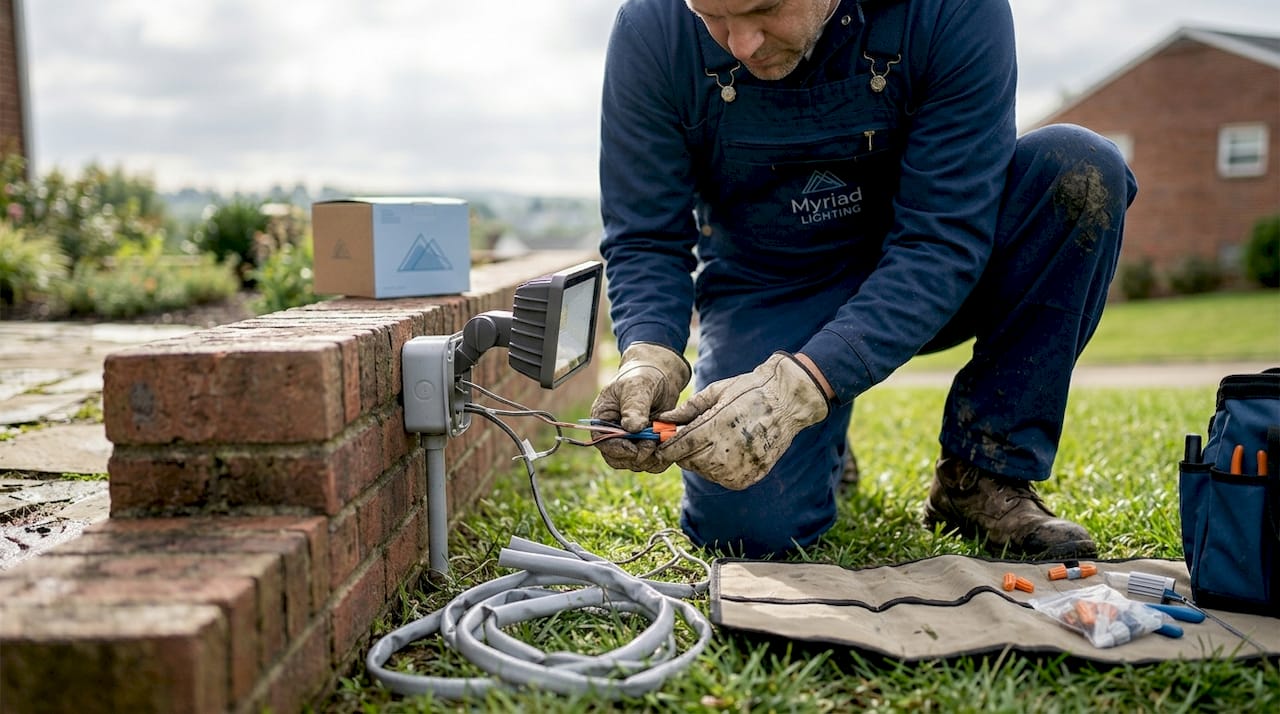
Wired systems are the gold standard for reliability and brightness. They draw power directly from your home's electrical system, so there are no batteries to replace and no performance drops in cold weather. The tradeoff is installation complexity. Running conduit and connecting to your electrical panel requires a licensed electrician, but the result is a system that works flawlessly for decades. Wired systems are ideal for permanent fixtures like pathway lights, security floodlights, and architectural accent lighting.
Wireless systems offer flexibility that wired setups can't match. You can reposition them without any rewiring, and many integrate seamlessly with smart home platforms. The challenge is connectivity. A comparison of popular permanent outdoor light brands highlights an important distinction: proprietary WiFi systems offer easy setup but limited interoperability, while open standards like Zigbee, Thread, and Matter allow you to mix brands and build a more flexible multi-device ecosystem. For Pittsburgh homes with thick walls or large square footage, a mesh network setup is often necessary to maintain reliable signal outdoors.
Solar systems are appealing because they require no wiring at all. You mount them, point the panel toward the sun, and they charge during the day. However, the same comparison notes that solar is frequently praised for placement flexibility but criticized for inconsistent brightness and shorter runtime compared to reliable wired low-voltage systems. Pittsburgh's overcast winters make this problem worse. If your yard gets less than four hours of direct sunlight daily from November through February, solar may not deliver the performance you expect.
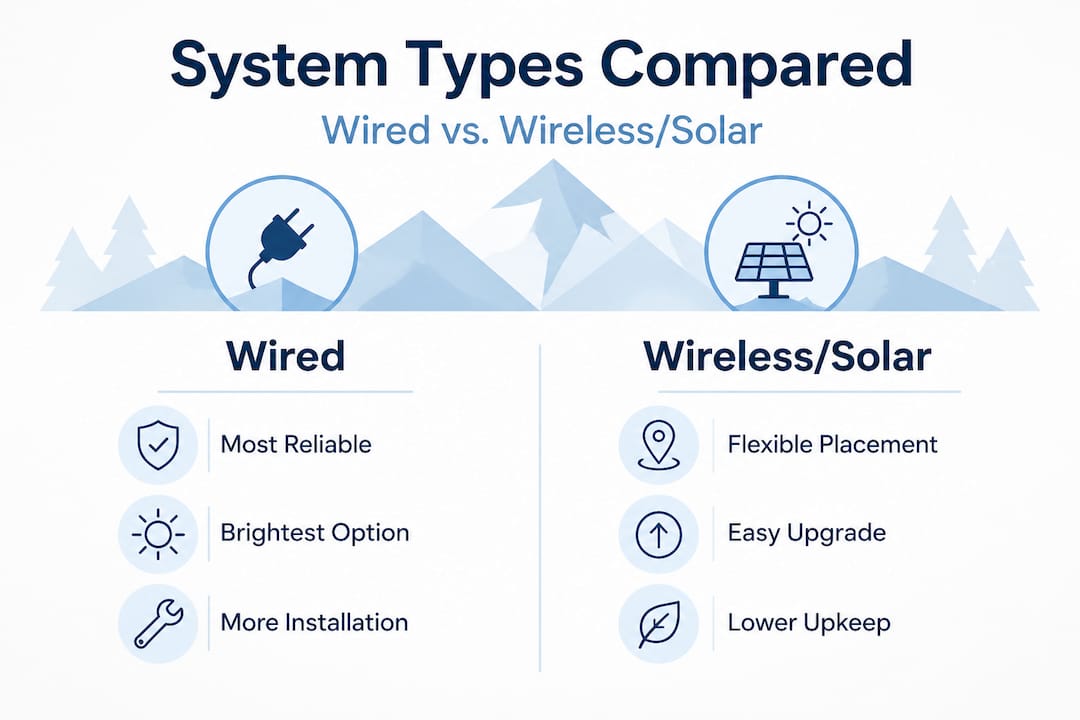
Here's a quick comparison to help you decide:
| System type | Reliability | Installation | Pittsburgh winter performance | Best use case |
|---|---|---|---|---|
| Wired | Excellent | Professional required | Excellent | Permanent fixtures, security |
| Wireless (WiFi/Zigbee) | Good | DIY possible | Good with mesh network | Flexible accent lighting |
| Solar | Variable | DIY easy | Poor in shaded/overcast areas | Sunny pathways, low-use spots |
Key considerations specific to Pittsburgh homes:
- Prioritize IP65+ weatherproofing on any outdoor unit, regardless of type
- LFP batteries outperform standard lithium-ion in freezing temperatures
- Zigbee or Matter-based systems give you more long-term flexibility than proprietary apps
- Homes with mature tree canopies should avoid solar in shaded zones
Pro Tip: Before buying, walk your property at night and note which areas have strong WiFi signal and which get direct sun during winter months. That ten-minute exercise will save you from buying the wrong system type for each zone.
Investing in quality lighting for Pittsburgh homes means thinking beyond the product spec sheet and considering how each system performs in your specific yard layout. Working with a team that understands professional lighting design features can help you avoid costly mismatches between system type and location.
Choosing and installing smart lighting for Pittsburgh's climate
You've learned the types. Next, let's look at how to select and install solutions built for Pittsburgh's unique challenges.
Pittsburgh's weather is genuinely demanding. Temperatures regularly drop below 20°F in January, ice storms can coat fixtures overnight, and summer thunderstorms bring high winds and heavy rain. Your lighting system needs to handle all of it without failing or requiring constant maintenance.
Follow these steps when selecting your system:
- Identify your zones. Separate your property into functional areas: entryways, pathways, driveways, garden beds, and perimeter security zones. Each zone may need a different lighting approach.
- Check weatherproofing ratings. Look for IP65 as the absolute minimum. IP65 means the fixture is dust-tight and protected against water jets from any direction. IP67 or IP68 offers even stronger protection for ground-level or partially submerged fixtures.
- Evaluate your power options. Determine whether each zone has access to wired power or relies on solar. Shaded zones should always use wired or wireless battery-powered options rather than solar.
- Choose your connectivity standard. If you already use a smart home platform, confirm compatibility before purchasing. Zigbee and Matter-based devices work across more platforms and are less likely to become obsolete.
- Plan your mounting approach. This step matters more than most homeowners realize.
On mounting: research from Wirecutter emphasizes prioritizing IP65+ weatherproofing and professional installation in Pittsburgh's variable climate to ensure longevity, and recommends starting with pathway and security lights for safety and aesthetics before adding decorative accents. Separately, adhesive mounts are a known weak point. As one product review specifically warns, adhesive mounts may fail in high winds, making screw-based mounting the far safer choice for Pittsburgh installations.
Here's a quick reference for weatherproofing ratings:
| IP rating | Dust protection | Water protection | Recommended use |
|---|---|---|---|
| IP44 | Partial | Splashing water | Covered porches only |
| IP65 | Full | Water jets | Most outdoor fixtures |
| IP67 | Full | Temporary submersion | Ground-level fixtures |
| IP68 | Full | Continuous submersion | Water feature lighting |
Pro Tip: Start with pathway lights and security floodlights before spending on decorative accent lighting. Getting the functional layer right first means your property is safer and better-looking from day one, and you can add aesthetic layers gradually without redoing your core setup.
Once your system is installed, take time to optimize placement. Pathway lights should illuminate the ground surface, not shine directly into visitors' eyes. Security lights should cover blind spots near garage doors, side gates, and back entrances. Accent lights work best when they highlight architectural features or mature trees rather than flooding the yard with flat, even light.
For more guidance on creating strong curb appeal through lighting placement, the team at Myriad Lighting has written about exterior lighting for curb appeal and the most common outdoor lighting mistakes that homeowners make during installation.
Common pitfalls and advanced tips for smart outdoor lighting
Before you finalize your setup, let's cover what most guides miss: common mistakes and advanced tips for Pittsburgh homes.
The biggest frustration most homeowners encounter after installation is connectivity. Multi-device setups are particularly prone to app glitches, especially when mixing brands or running too many devices through a single router. Solar units in shaded or low-insolation spots also underperform badly during Pittsburgh's gray winters, leaving security zones dark when you need them most.
Here are the mistakes Pittsburgh homeowners make most often:
- Relying on adhesive mounts in areas exposed to wind or freeze-thaw cycles, which causes fixtures to fall and potentially break
- Mixing incompatible ecosystems by buying one brand for the front yard and another for the back, then discovering they won't work together in a single app
- Placing solar lights under tree canopy or on north-facing walls where they never get enough sun to charge properly
- Ignoring WiFi dead zones at the edges of the property, which causes lights to go offline or respond slowly to app commands
- Skipping firmware updates on smart controllers, which leaves devices vulnerable to bugs and compatibility issues as platforms evolve
Advanced tips for getting the most from your system:
- Use a dedicated outdoor mesh WiFi node (like a weatherproof Eero or Orbi satellite) to extend reliable coverage to your garage and back yard
- Set up geofencing so lights turn on automatically when you arrive home after dark, without relying on motion sensors alone
- Schedule seasonal lighting programs through your app so your system adjusts to Pittsburgh's dramatically shorter winter days without manual intervention
- Group devices by zone in your app so you can control the front yard, back yard, and driveway independently with a single tap
Pro Tip: Keep your smart lighting app updated and check for firmware updates on individual fixtures every few months. Manufacturers regularly push improvements that fix connectivity bugs and add new scheduling features. Zigbee or Matter-based devices also tend to receive longer-term software support than proprietary WiFi systems, making them a smarter long-term investment.
For a deeper look at what not to do, the article on common outdoor lighting mistakes covers real-world examples from Pittsburgh homes that are worth reviewing before you finalize your plan.
Why most Pittsburgh homeowners underestimate smart lighting's value
Here's a perspective you won't find in typical guides.
Most conversations about smart outdoor lighting focus on two things: how it looks and how easy it is to control from your phone. Those are real benefits, but they're the surface layer. What gets overlooked consistently is the compounding value that a well-designed system builds over time.
Think about what outdoor lighting actually does to a property in Pittsburgh. It extends the usable hours of your outdoor space. It signals to potential buyers that the home is well-maintained and secure. It reduces liability from trips and falls on dark walkways. And it creates a sense of arrival, that feeling when you pull into your driveway and the home looks genuinely welcoming, that affects your daily mood more than most people admit.
The conventional wisdom says to buy a few smart bulbs, download an app, and call it done. That approach works for a single fixture. It fails for a whole property. What we've seen consistently in Pittsburgh is that homeowners who invest in a professionally designed and installed system get dramatically better results, not just aesthetically, but in terms of reliability and longevity. A system with hidden wiring, properly rated fixtures, and a coherent design plan simply outperforms a collection of DIY purchases over any meaningful time horizon.
There's also a safety dimension that rarely gets discussed honestly. Pittsburgh's topography means many homes have uneven terrain, steep driveways, and narrow side yards. Those are exactly the spots where a fall in the dark causes a serious injury. Good lighting in those zones is not a luxury. It is a direct investment in physical safety for your family and your guests.
The impact of quality lighting on Pittsburgh homes goes beyond curb appeal. It touches property value, personal safety, and the daily experience of living in your home. Treating it as a serious design decision rather than an afterthought is the mindset shift that separates homes that look great from homes that work great.
Smart lighting solutions for Pittsburgh homes
Ready to take the next step? Myriad Lighting specializes in professional outdoor lighting design and installation for Pittsburgh homeowners who want results that last. Whether you're looking to transform your yard with landscape lighting in Pittsburgh or add stunning seasonal displays with holiday lighting in Pittsburgh, the process starts with a consultation designed around your property's specific layout, goals, and budget.

Every installation uses professional-grade fixtures with hidden wiring, screw-mounted hardware, and weatherproofing rated for Pittsburgh's climate. The team handles everything from design through final setup, so you get a system that works reliably from day one without the guesswork of a DIY approach. If you're serious about enhancing your home's safety, curb appeal, and long-term value, scheduling a consultation is the most direct path to getting it right.
Frequently asked questions
Do smart outdoor lights work during harsh Pittsburgh winters?
Yes, but you need IP65+ weatherproof fixtures and LFP battery models for reliable performance. Standard lithium-ion batteries lose significant capacity in freezing temperatures, making LFP the better choice for solar units in Pittsburgh winters.
Which smart lighting system is best for multi-brand setups?
Open standards like Zigbee or Matter offer far better compatibility than proprietary WiFi systems. Proprietary systems are easier to set up initially but limit your ability to mix brands or switch platforms later.
Can solar smart outdoor lights handle shaded or low-sun areas?
Solar lights struggle significantly in shaded or low-insolation spots. Pittsburgh's overcast winters make this worse, and solar underperformance in shaded areas is one of the most common complaints from local homeowners who chose solar without checking sun exposure first.
What should I prioritize when buying smart outdoor lighting?
Prioritize IP65+ weatherproofing and professional installation above all else. Research consistently shows that starting with pathway and security lights before decorative accents gives you the best combination of safety and aesthetics from the start.
How can I avoid app glitches with multiple smart outdoor devices?
Keep your app and device firmware updated regularly, and consider Zigbee or Matter-based devices for more stable multi-device connections. App glitches in multi-device setups are most common when mixing brands that use different proprietary protocols on the same network.