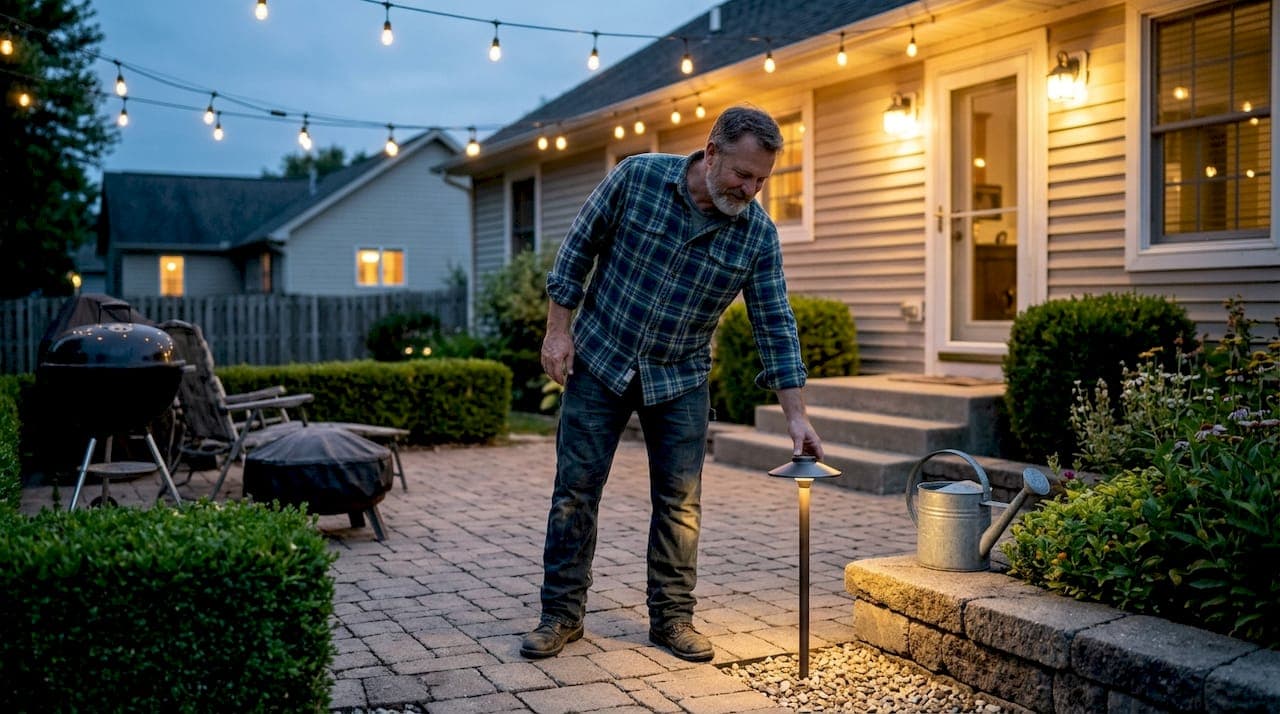
Most homeowners put a lot of thought into how their outdoor spaces look. String lights over the patio, uplights on a favorite tree, maybe a lantern by the front door. But there's a whole category of outdoor lighting that often gets overlooked, and it's arguably the most important one: task lighting. Without it, your beautiful yard becomes a hazard the moment the sun goes down. This guide will walk you through exactly what outdoor task lighting is, why it matters for homes here in Pittsburgh, how to choose the right fixtures, and how to keep everything running at its best.
Table of Contents
- What is task lighting outdoors?
- Why task lighting matters for Pittsburgh homes
- Choosing the right fixtures and placements
- How to install and maintain outdoor task lighting
- Our perspective: Task lighting that actually fits your lifestyle
- Ready to reimagine your Pittsburgh outdoor spaces?
- Frequently asked questions
Key Takeaways
| Point | Details |
|---|---|
| Define task lighting | Task lighting provides functional, focused illumination for specific outdoor activities and safety. |
| Safety and usability | Properly placed task lighting reduces hazards and extends the usability of outdoor spaces. |
| Fixture selection | Choose lighting fixtures and placements that fit your home’s layout, climate, and regular use patterns. |
| Installation matters | Correct installation and maintenance are crucial for long-term lighting performance and safety. |
What is task lighting outdoors?
Task lighting is lighting with a job. Instead of simply casting a warm glow or drawing attention to a decorative feature, it illuminates a specific area where an activity takes place. Think about the difference between a chandelier in a dining room and the light directly over a kitchen counter. The chandelier sets a mood. The counter light helps you see what you're cutting. That same principle applies outside.
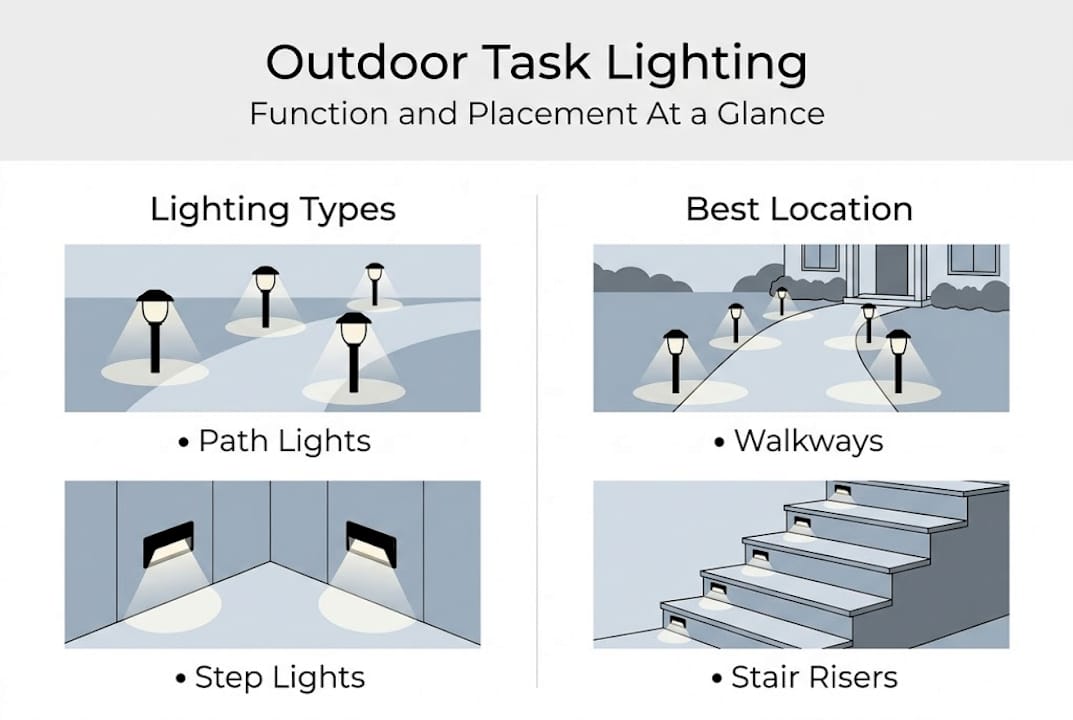
Outdoors, task lighting covers things like path lights guiding you safely across your yard, step lights mounted into risers so you don't miss a step in the dark, undercabinet lighting in an outdoor kitchen so you can actually see your grill or prep area, and bright fixtures at entryways so you can read house numbers or find your keys. These are all purposeful, functional, and essential.
How does task lighting differ from the other two main types? Here's a quick comparison:
| Lighting type | Primary purpose | Typical examples |
|---|---|---|
| Task | Functional visibility for specific activities | Step lights, path lights, grill lights |
| Accent | Decorative, highlights architectural or landscape features | Uplights on trees, facade wash lighting |
| Ambient | General atmosphere and overall illumination | String lights, lanterns, post lights |
All three types have a role in a well-designed outdoor space. But task lighting is essential for outdoor safety and usability. Without it, even the most beautifully decorated yard becomes risky after dark.
Common outdoor tasks that require dedicated lighting include:
- Grilling and food prep at an outdoor kitchen station
- Walking along paths, driveways, or garden beds
- Navigating steps and level changes on decks or patios
- Entering and exiting through gates, side doors, and garages
- Parking and unloading in driveways at night
Investing in quality outdoor lighting means thinking about every area where someone needs to do something, not just admire the view. And if you want all of it to look polished, illuminating exteriors with layered solutions that blend task and accent lighting is the smartest move. Research also confirms there are real benefits of exterior lighting beyond aesthetics, including safety, security, and property value.
Why task lighting matters for Pittsburgh homes
Pittsburgh's landscape is hilly, its neighborhoods are older, and its weather is genuinely unpredictable. Winters bring ice and early sunsets. Fall means wet leaves on steps and walkways. Spring and summer storms create dark, slick conditions. All of that means your outdoor lighting needs to do more than look good. It needs to work hard.
"Effective task lighting reduces trip and fall risks for residents and guests, especially along uneven or elevated surfaces."
Many Pittsburgh properties have distinctive features that create real hazards without proper lighting. Stone steps leading up to a front porch. A side yard with a steep slope. A detached garage with a narrow path connecting it to the house. These aren't design flaws. They're character. But they need proper task lighting to stay safe.
Here are the most common problem areas local homeowners overlook:
- Front porch steps, especially on older homes with uneven stone or brick
- Side entry paths between the house and detached structures
- Rear decks and patios where steps lead down to the yard
- Driveways on sloped lots where headlights don't cover every surface
- Outdoor kitchen or grill stations that get used well into the evening
Beyond safety, task lighting can increase usable hours of outdoor spaces. A well-lit patio or deck extends your outdoor season even when daylight is short. That's real, tangible value, not just style.
One of the most common outdoor lighting mistakes to avoid is treating task and accent lighting as interchangeable. A soft wash of light over a garden bed won't help you see the edge of your deck. Bright flood lighting that covers everything creates glare that actually makes it harder to see. Both are the wrong tool for the job.
Pro Tip: When planning your task lighting layout, walk your property at night with a flashlight and note every spot where you squint or slow down. Those are your task lighting zones.
Working with professional lighting design experts helps you catch these blind spots. They also know how to improve outdoor lighting safety with specific fixture types and placements that serve both safety and beauty.
Choosing the right fixtures and placements
Knowing you need task lighting is one thing. Knowing what to buy and where to put it is another. Here's a practical approach to getting it right.
Steps to plan your task lighting:
- Walk your space at night. Identify every area where you or your guests need clear visibility to move safely or complete an activity.
- Group your needs. Separate navigation areas (paths, steps, driveways) from work areas (grills, outdoor bars, gardening stations).
- Match fixture type to purpose. Different tasks require different beam angles, brightness levels, and mounting positions.
- Consider your architecture. Older Pittsburgh homes have specific features like stone facades, brick steps, and covered porches that affect what fixtures fit visually and structurally.
- Plan for weather. All fixtures should be rated for wet or damp locations. In Pittsburgh, this isn't optional.
Here's a helpful breakdown of common fixture types and their best uses:
| Fixture type | Best use | Mounting location |
|---|---|---|
| Step lights | Illuminating individual stair risers | Recessed into riser or mounted to side wall |
| Path lights | Lighting walkways and garden edges | Staked into ground, 6-8 feet apart |
| Deck lights | Broad coverage for patio activities | Post caps, railings, or overhead mounts |
| Undercabinet lights | Task work at outdoor kitchens | Mounted beneath cabinet or hood |
| Wall-mounted fixtures | Entry points, gates, garage doors | At eye level beside doors |
Fixture type and placement are key to creating functional outdoor spaces that look intentional rather than thrown together. Poor placement, even with a great fixture, creates shadows in exactly the wrong places.
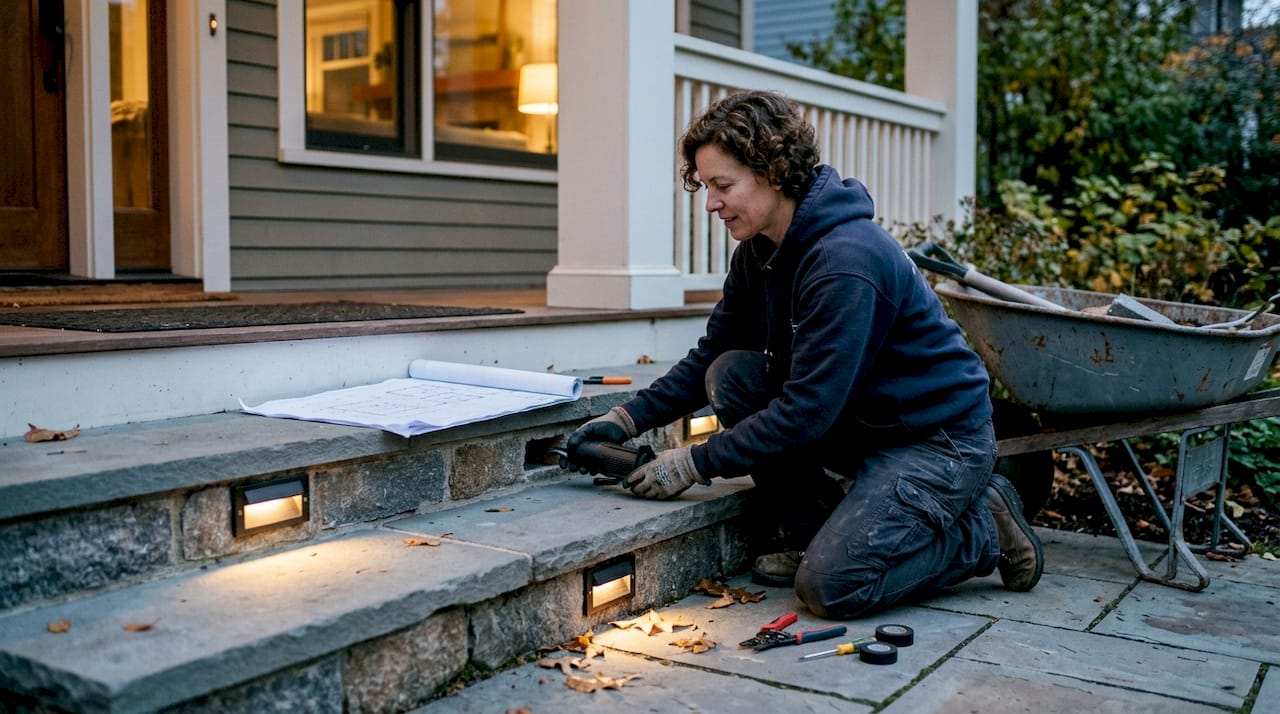
Pro Tip: Layer your task lighting with a lower-intensity ambient source nearby. This reduces harsh contrast, which is easier on the eyes and looks far more polished.
For personalized recommendations based on your specific home, explore the guidance available on lighting design features that work well for Pittsburgh properties. If you want to learn more before deciding, this resource on how to choose outdoor lighting covers the fundamentals clearly.
How to install and maintain outdoor task lighting
Even the best fixture plan falls apart with poor installation or neglected maintenance. Here's what you need to know to keep your task lighting running reliably through Pittsburgh's four demanding seasons.
Installation steps:
- Map your circuits. Understand which areas will run on low-voltage landscape circuits, which need line-voltage connections, and whether you need a licensed electrician for any part of the work.
- Choose the right cable and conduit. Outdoor wiring must be protected from moisture and physical damage. Use direct-burial cable where it will be underground.
- Install fixtures according to their IP rating. An IP65-rated fixture handles rain; an IP67-rated one can handle temporary submersion. Check the rating before mounting near drainage areas.
- Test before burying. Run all connections and test every fixture before closing up trenches or sealing junction boxes.
- Set timers or smart controls. Proper installation enhances longevity. Automated controls prevent fixtures from running 24/7, which extends bulb life significantly.
For Pittsburgh homeowners, benefits of low voltage lighting include easier DIY installation, lower energy costs, and safer handling during maintenance. Low-voltage systems (typically 12V) are ideal for path and step lights.
Seasonal maintenance tasks to keep on your list:
- Clean lenses and fixture housings after winter and fall, when debris and road salt accumulate
- Check and replace seals on recessed and in-ground fixtures each spring
- Inspect wiring connections after heavy frost or ground movement, common in Pittsburgh's freeze-thaw cycles
- Replace LED bulbs as needed, though quality LEDs can last 25,000 hours or more
- Adjust fixture angles if soil settling has shifted path or step lights
Pro Tip: If your outdoor lighting system uses a transformer, test the voltage output each spring. Voltage drop over a long run can dim your task lights significantly, which defeats their whole purpose.
Knowing when to avoid lighting mistakes during installation, like overloading a transformer or skipping waterproof wire connectors, saves you from costly repairs later.
Our perspective: Task lighting that actually fits your lifestyle
Here's something we've learned after working on countless Pittsburgh properties: homeowners often start by pointing at a photo from a lighting catalog and saying, "I want that." And we get it. Those images are polished and inviting. But that backyard in the photo is flat, the climate is different, and the homeowner's habits are unknown. Copying it usually misses the mark.
The biggest mistake local homeowners make isn't choosing the wrong fixture. It's skipping the conversation about how they actually use their outdoor space. Do you grill at 9 p.m. in July? Do you have elderly family members who visit? Do the kids run out to the yard after dinner? Those answers change everything about fixture choice, placement, and brightness.
Good task lighting also isn't a one-time project. Your habits shift, your landscape matures, and your home evolves. The right approach treats task lighting as a living part of your outdoor space, not a box you check once. We've seen quality lighting transformations happen when homeowners commit to revisiting their setup every few years. That's when lighting really starts to feel effortless rather than accidental.
Ready to reimagine your Pittsburgh outdoor spaces?
Task lighting can genuinely change how you experience your home after dark. It adds safety, extends your outdoor hours, and gives everything a finished, intentional look. But getting it right takes more than buying a few fixtures from a big-box store.

At Myriad Lighting, we're Pittsburgh's outdoor lighting experts who understand local architecture, climate, and the real-world needs of homeowners here. From initial consultation to final installation, we handle every detail so you don't have to guess. If you're ready to see what purpose-built task lighting can do for your property, visit myriadlighting.com to explore our services or request a personalized quote.
Frequently asked questions
What's the difference between task lighting and accent lighting outdoors?
Task lighting serves functional purposes like safety and usability, while accent lighting is primarily decorative. Task lighting provides focused illumination for specific activities; accent lighting highlights features without increasing visibility where it's needed most.
Where should I place outdoor task lighting for maximum effect?
Focus on steps, pathways, entryways, and outdoor work areas like grills or prep stations. Proper task light placement increases safety by directing light exactly where movement and activity happen.
Can I install outdoor task lighting myself or should I hire a pro?
Simple solar or plug-in fixtures are generally DIY-friendly, but hardwired or complex multi-zone systems are safer when installed professionally. Professional installation reduces safety risks and ensures code compliance.
What are the best bulbs for outdoor task lighting in Pittsburgh?
LED bulbs are the clear choice for efficiency and long-term durability in variable climates. LED bulbs are best suited for outdoor use because they handle temperature swings and moisture far better than traditional incandescent options.
Recommended
- How quality outdoor lighting enhances Pittsburgh homes
- Motion-activated outdoor lighting: homeowner's guide
- How to illuminate building exteriors for stunning curb appeal
- Top features of professional lighting design for Pittsburgh homes
- How to choose outdoor lighting for Calgary homes: security and style
- Why install pool lighting? Boost safety and style in 2026